With my newly purchased binoculars, I headed out to Kasavanahalli Lake. As lakes go, this one has always led a tenuous existence.
When I last visited a month ago, I left agitated. Sewage poured in from the unauthorized dwellings clustered along its edges. Pigs lolled in black mud. Men and women squatted among the bushes, steadily soiling the shrinking “unconquered” patches of bank. The only place that looked clean—though I never checked my gut on this—was the small graveyard by the entrance.
This time around though I was pleasantly surprised. The dwellings had been razed, levelled, and the debris cleared away. That alone had cut most of the sewage flowing into the lake. No one was trespassing into the bushes with full stomachs. I could actually take a deep breath without having to shut my mind against the usual stew of stenches that clung to the lake’s periphery.
The pigs still waddled in the mud. One biker still brazenly used the pedestrian walkway. But overall, it felt like a genuine improvement from the slow decay the lake had seemed destined for.
I don’t know what became of the people who had built those dwellings in the lake’s buffer zone. They weren’t corrugated-iron shacks or flimsy metal structures. They were rows of brick huts with reinforced concrete—proper little slums that looked as if someone with money had put them up and then leased them to migrant workers. They carried the unmistakable handprints of a local real-estate goon’s tasteless greed for public land, enabled by apathetic babus who hide behind mountains of files in untraceable offices and only emerge to have their palms greased.
I felt bad for the people who were displaced.
Actually, to be honest, I didn’t. Such is life. Beyond a vague fury at the larger system that is India, I decided this was a necessary move. Poverty is not an excuse to colonize public spaces.
That may sound high and mighty, but isn’t it the opening premise of the very funny The Hitchhiker’s Guide to the Galaxy?
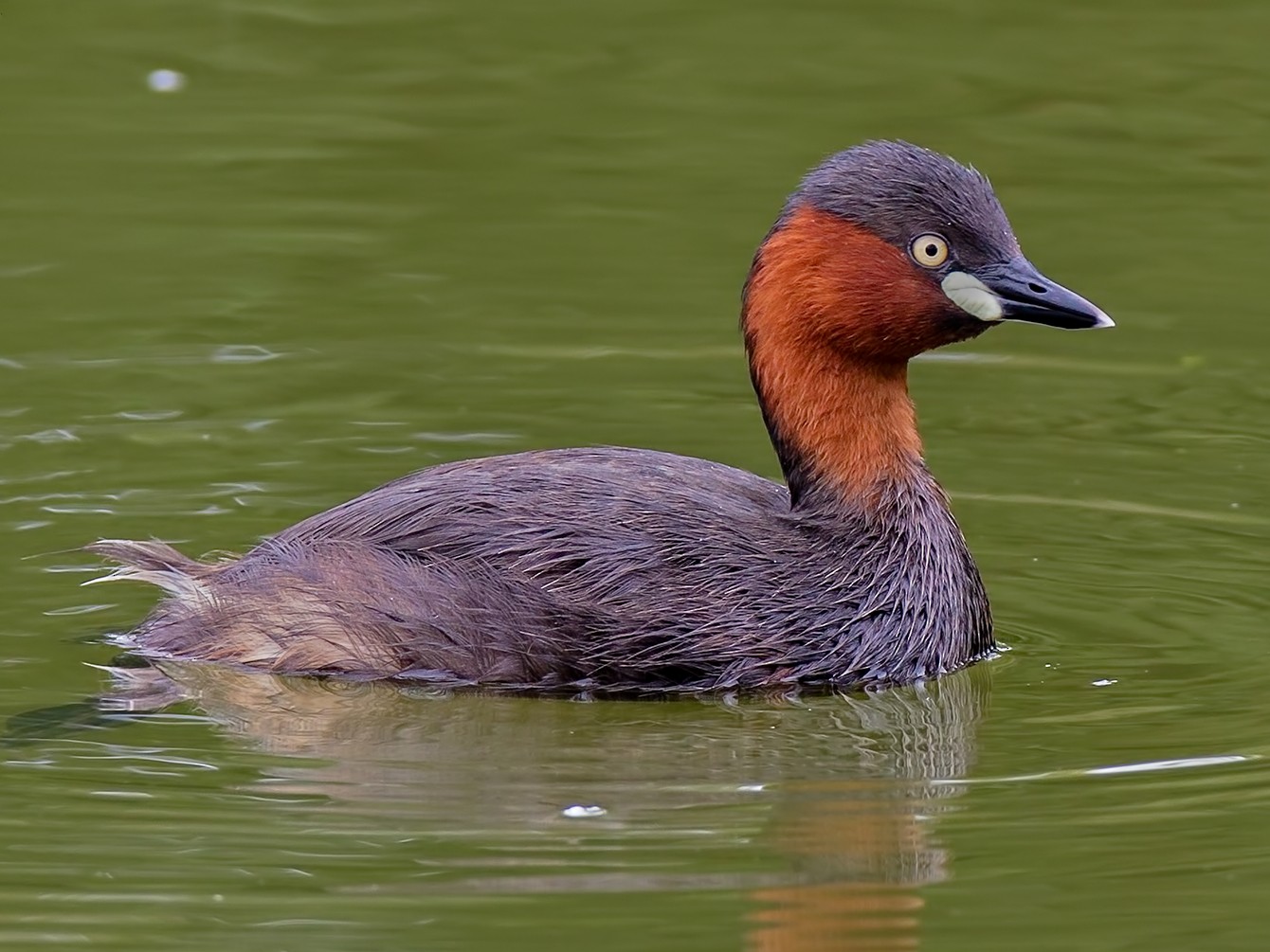
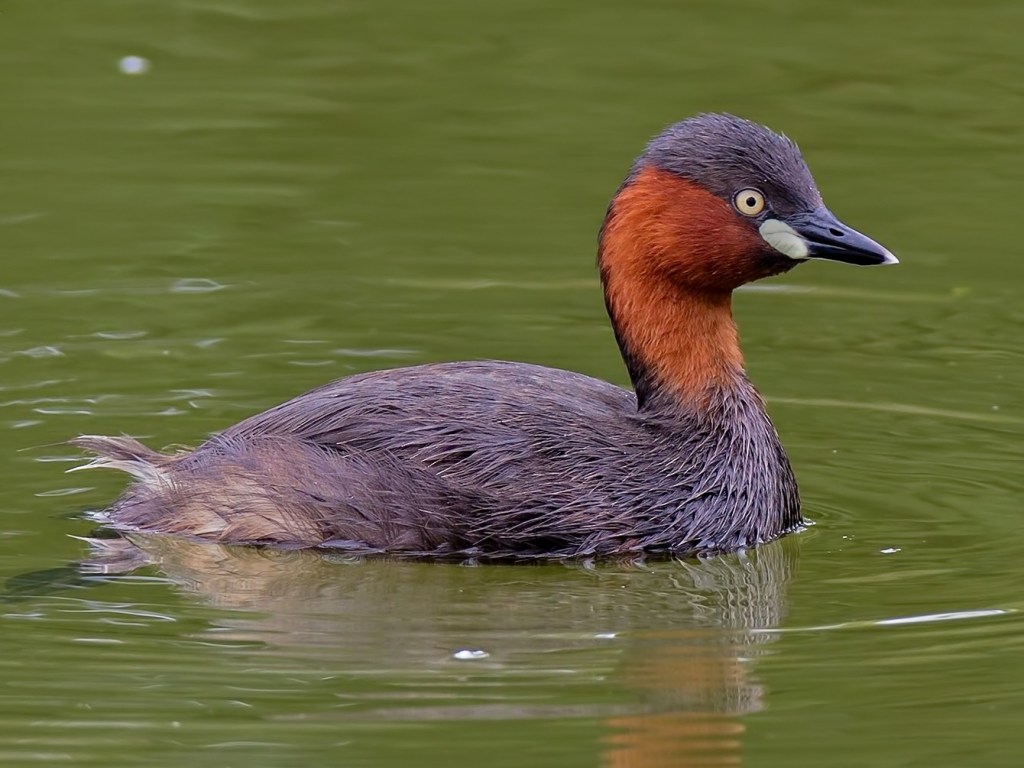
So when I raised my binoculars this time and found a flock of Little Grebes paddling across the water, I was in a better mood.
I don’t know whether a Big Grebe exists. Chances are it does—after all, we have the Little, Intermediate, and Great Egrets, and similar hierarchies among cormorants, flamingos, and other birds.
The Little Grebe has some interesting names. It is commonly called the dabchick—a chick that dabs for food, diving underwater and surfacing every few seconds. I found the scientific name to be equally fascinating: the genus Tachybaptus comes from Ancient Greek takhus (“fast”) and bapto (“to sink under”); the specific ruficollis from Latin rufus (“red”) and Modern Latin -collis (“-necked”), itself from collum (“neck”).
I spent a good amount of time watching the Little Grebes this morning. Three Spot-billed Ducks swam slowly in a line, Oriental Darters sunned themselves in the sun, and it was cormorant breeding season —beautiful birds, but this trip I wanted to focus on the grebes.
They are really small. Compared with the Spot-billed Ducks, the Eurasian Coots, and the odd pelican floating around, the grebes could easily have been mistaken for the chicks of the larger birds. What gives away their adulthood is the certainty with which they dive, leaving a wake completely independent of the bigger birds’—agency that belongs only to adult foragers.
A quick search for their Tamil and Malayalam names reveals the same association with diving: முக்குளிப்பான் (Mukkulippan) or ஊரல் குளிவை in Tamil, and മുങ്ങാങ്കോഴി (Mungankozhi) in Malayalam.
I haven’t seen much of the Little Grebe beyond its swimming and can’t pretend to know its other walks of life. But there is a reason I wanted to familiarise myself with its appearance.
I was once on a birding trip—my only such trip—with a really nice set of people. There was only one fellow who was a bit of a show-off. Whenever the guide pointed out a bird, he would point to a different one smugly. This happened repeatedly. At one point he suddenly yelled, “Little Grebe!” I was trying to focus on an egret; his outburst made me slip and twist my ankle. The next day I had to cut the trip short and drive home for an X-ray.
Ever since that incident I had wanted to be able to spot a Little Grebe for myself—to see what exotic creature could make someone jump like that.
As gorgeous as the bird is, I hope he has mended his ways. No Little Grebe is worth jump-scaring fellow travellers into MRI rooms.





 The Reluctant Book Worm
Leave a comment