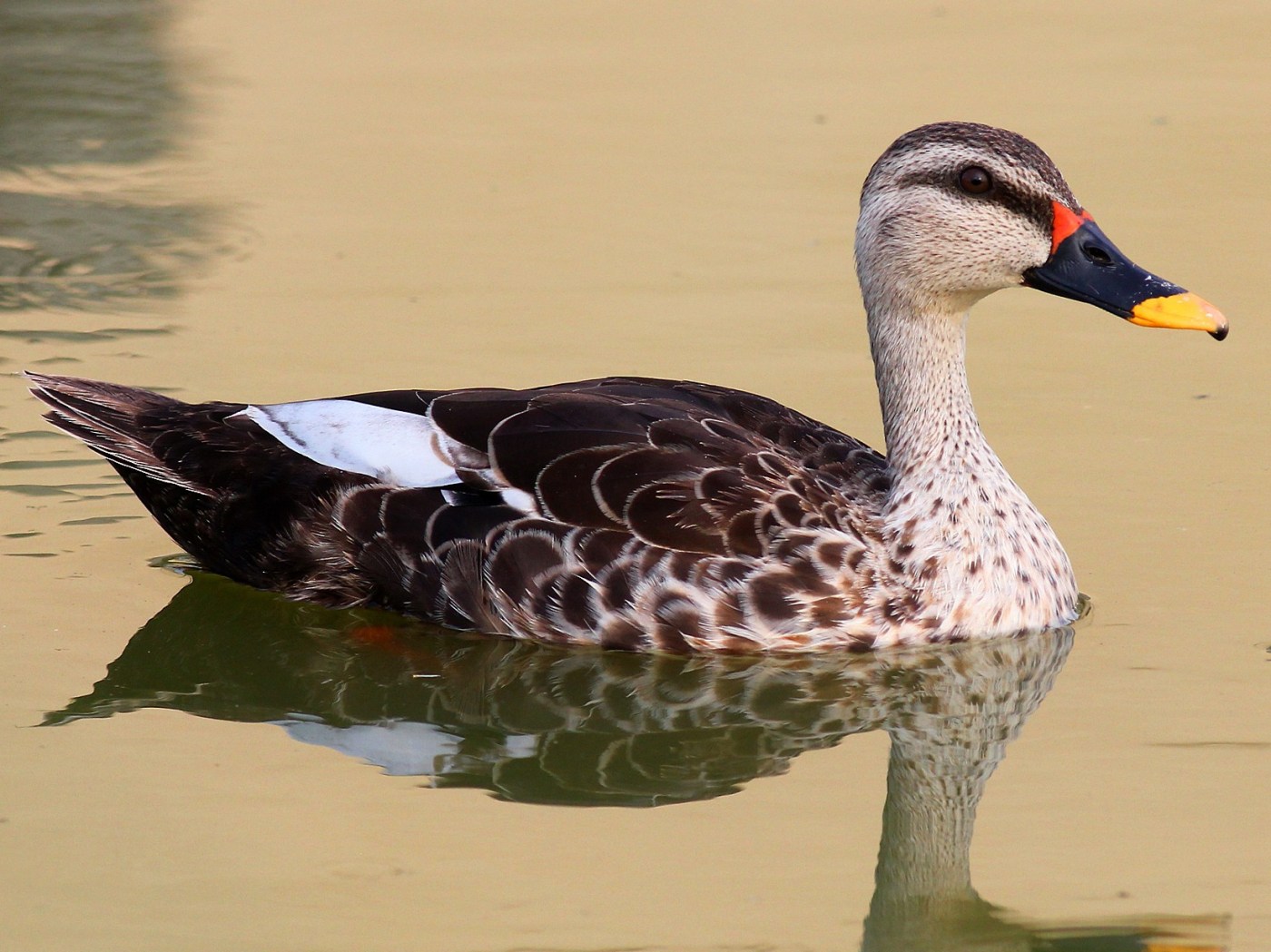
The duck turned its back on me. I had overstayed.
For twenty minutes I had been watching a block of feathers rearrange itself in the light. A dull green on the tail went blue as it preened. I had seen that trick in sunbirds—tiny birds that flash like jewellery when they bounce and jolt on tree branches.
I had not expected it from something this heavy, this ordinary, this banal – banal only by field guide standards – I find them incredibly aesthetic. Then the wing caught the sun, and the green went purple, then blue, as if someone were changing stage lights behind the screen.
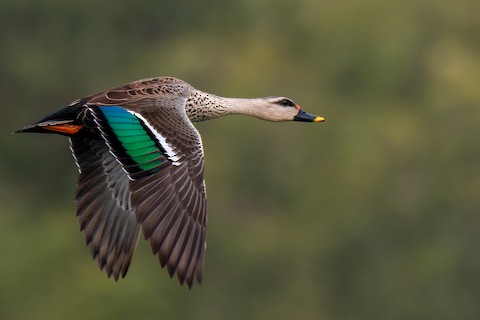
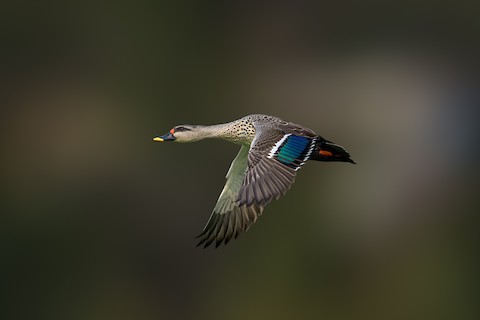
Most of the duck’s colour is pigment: the brown body, the yellow bill-tip. The flash on the speculum is structural. Light hits layers of keratin and melanin at scales close to the wavelength of visible light. Some colours reinforce; others cancel. Change the angle, and green becomes blue.
The duck, for its part, seemed unimpressed by the physics.
C. V. Raman worried at this problem in the 1930s. Studying the Indian roller, he argued that blue feathers were not a simple Tyndall scatter, like smoke or skimmed milk. The colours ran through the spectrum and shifted with the light. He suspected interference in thin films and cavities inside the barb. Later work agreed: many of the richest colours in birds are architecture, not paint. Raman was looking at a flashier bird. The same physics sits quietly on a dabbling duck that would rather eat pondweed than illustrate a lecture.
No bird has blue pigmentation. This fact blew my mind as much as learning that birds were dinosaurs.
The Indian spot-billed duck (Anas poecilorhyncha) is a large resident of lakes, marshes, tanks and paddy edges across the subcontinent. Mallard-sized, grey-brown and scaly, it has orange legs and a black bill tipped yellow. This yellow dab on the end of its bill always reminds me of some industrial marking, something akin to having passed nature’s quality check. In flight, the speculum is metallic green with a white band. When dabbling it tips forward in shallow water for plants, seeds and the odd invertebrate, with the dignity of someone rummaging in a fridge.
It is common enough that people walk past it.
That is why the twenty minutes mattered. A familiar bird is easy to treat as already known.
That is also the difference between watching and photographing. Photography wants a frame: the catchlight, the water-drop, the moment that will survive the cull and, if possible, a little envy online. The camera argues with time: this, not that. Watching has no such contract. You can stay with the unremarkable minutes—the preening, the half-turn, the colour that exists only from where you stand. Nothing is retained except what attention keeps. The gain is that you are not always leaning forward like a waiter expecting a tip.
It is meditative.
I have been thinking about that while watching my daughter leave childhood. The face from last month is not quite the face in front of you. One week she wants the names of things. The next she wants the room and will not say why—a more advanced way of turning her back and paddling off. If I treat the years as pictures to capture, I miss the slow iridescence. Is parenting here simply standing at the water without a camera, noticing the colour has changed, and accepting that she would like me to stop noticing quite so hard?
The duck paddled into the glare and became a dark shape with a yellow bill. I did not follow. Some things appear only if you are slightly late, slightly unproductive, and fully there—and if you let the subject leave when it has had enough of you.






Leave a comment