I knew I was in trouble when my internal monologues started featuring a full supporting cast with feathers — and that one of them was now due an apology.
You see, the red-wattled lapwing is one of the most distinctive birds I encounter. Visually and aurally.
I still remember the first night I properly heard its call and realised I could identify the bird by sound alone. This was not too far in the past. Maybe a year. I felt disproportionately joyful.
So why, I now wonder, have I never written about the red-wattled lapwing among the first birds I chose to notice properly? And so, I feel guilty about the oversight.
I sigh. I now owe birds an apology. I do not mind it. An apology owed and paid is penitential. In fact, I have caught myself offending many times just so that I can experience the thrill of absolution.
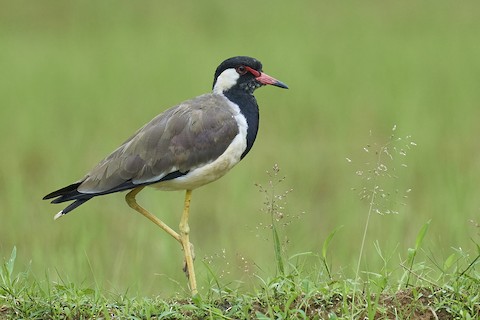
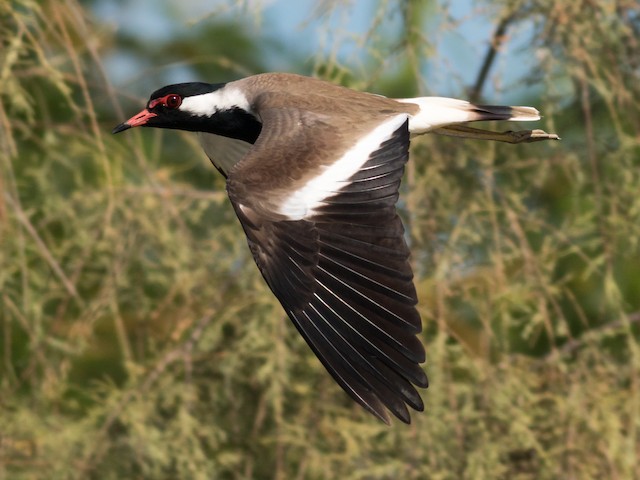
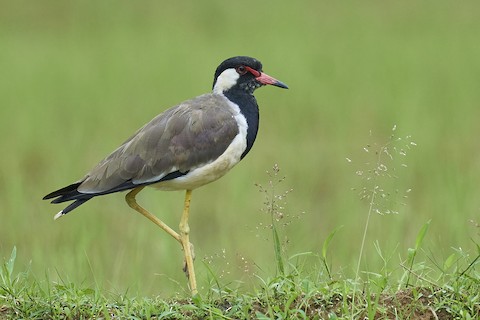
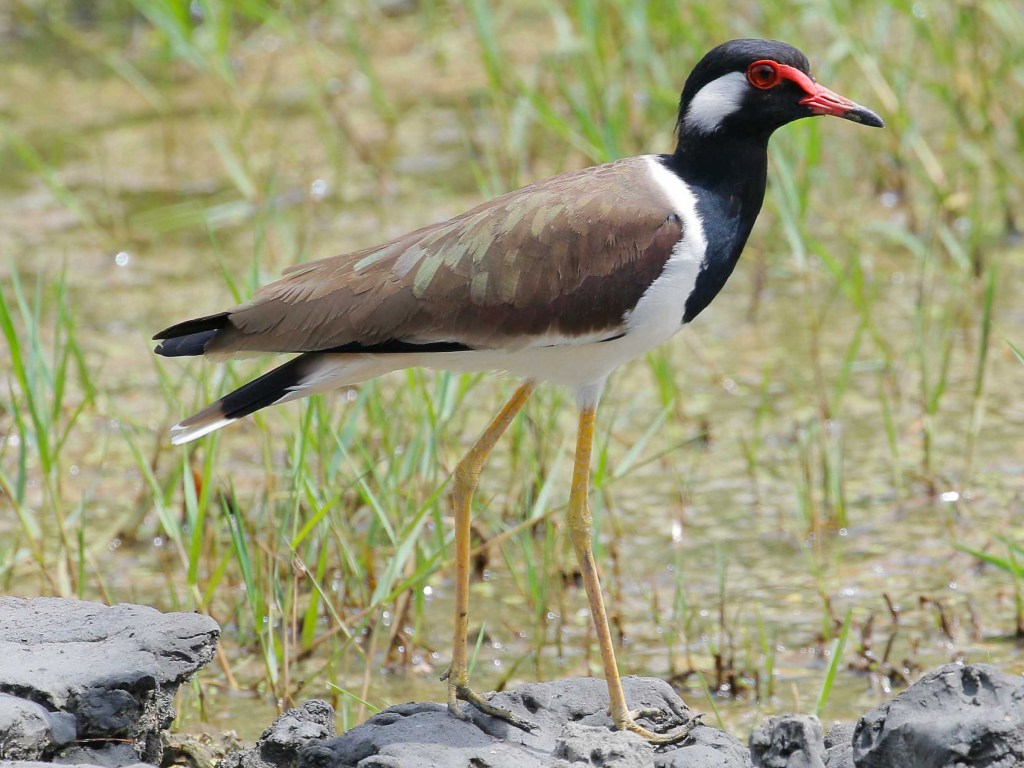
It does not help that the red-wattled lapwing looks like a bird that has dressed carefully for an argument. Black head and breast meet a warm brown back with the clean authority of someone who knows exactly where the boundaries are. White underparts stay spotless, long yellow legs stalk about with deliberate purpose, and a red bill tipped in black finishes the look. The real statement piece, though, is the pair of bright red fleshy wattles perched in front of the eyes — as if the bird has permanently raised two small, indignant flags on its face.
Even when standing still, it manages to appear both slightly offended and fully prepared to escalate.
Or maybe this was precisely why I had been skirting around the bird all along. My bird blog has always been part ornithology 101 homework, part mild introspection, and part outlet for whatever worldview happens to be leaking out that week. I wasn’t sure which of those layers I am dealing with here, or how many other ones are still buried in the lasagna.
Even beyond the fantastic appearance, the red-wattled lapwing has behavioral patterns that are beyond comprehension.
I once watched a red-wattled lapwing limp across a half-plowed field. One wing dragged. The gait was carefully uneven. Every few steps it glanced back, as if checking that the audience was still following the plot. I was. Intently. Somewhere behind it, pressed flat against the earth and doing an excellent impression of a small stone, sat either eggs or chicks. The broken wing was pure theatre. The real production stayed carefully offstage.
This is the bird’s signature distraction display. When danger approaches, it does not simply flee or freeze. It invents a smaller, more manageable crisis and offers itself as the decoy. The predator is invited to chase the injured party while the actual vulnerability remains undisturbed. Once the threat has been led a safe distance away, the lapwing recovers with impressive speed and returns to its post, as if the whole episode had been a minor scheduling conflict.
It is difficult not to recognise the manoeuvre.
In a world that notices everything and forgets nothing, most of us have perfected our own versions of the broken wing.
We perform a convincing level of busyness so no one inquires about the quieter, more fragile projects. We offer mild incompetence in one area to shield competence in another. We become slightly overwhelmed, slightly chaotic, or suddenly very interested in a secondary problem at the exact moment something more important needs covering. The display is rarely planned in advance, yet it works with surprising reliability. Attention is finite. If you can redirect it toward a plausible secondary drama, the primary one buys a little more time.
The lapwing, to its credit, does all this while living completely in the open. It does not nest in dense cover or high branches. It scrapes a shallow depression in exposed ground — fields, dry tank beds, the occasional rooftop — and raises its young in full view of the sky and whatever walks beneath it. The landscape around it has changed without asking permission: wetlands drained, fields fragmented, concrete advancing with the quiet confidence of something that expects to win. Yet the bird has adjusted. It forages in suburban gardens, breeds beside highways, and continues its loud, insistent calling from places that would have been unrecognisable a century ago. It thrives not by waiting for the original habitat to return, but by accepting the altered one and still finding a way to nest.
There is, of course, a cost. The same bird capable of staging a convincing injury is also the one that rarely stops scanning. Its call carries through the night on both moonlit and ordinary evenings. It is the self-appointed sentinel of the fields, the first to notice movement and the last to believe the danger has actually left. Constant vigilance is useful when your home has no walls. It is also tiring. The price of living without cover is that you must keep watching, keep calling, and remain permanently ready to produce the next distraction at short notice.
Perhaps that is the quiet tension the bird holds up for us.
We, too, inhabit landscapes that no longer match the ones we were designed for — cities that never sleep, timelines that compress, attention that arrives already fractured. We adapt. We stage our small dramas. We keep the most important things slightly off-centre, protected by the noise of secondary crises.
And somewhere in the middle of all that performance, we are still trying to raise something worth defending on open ground.






 The Reluctant Book Worm
Leave a comment