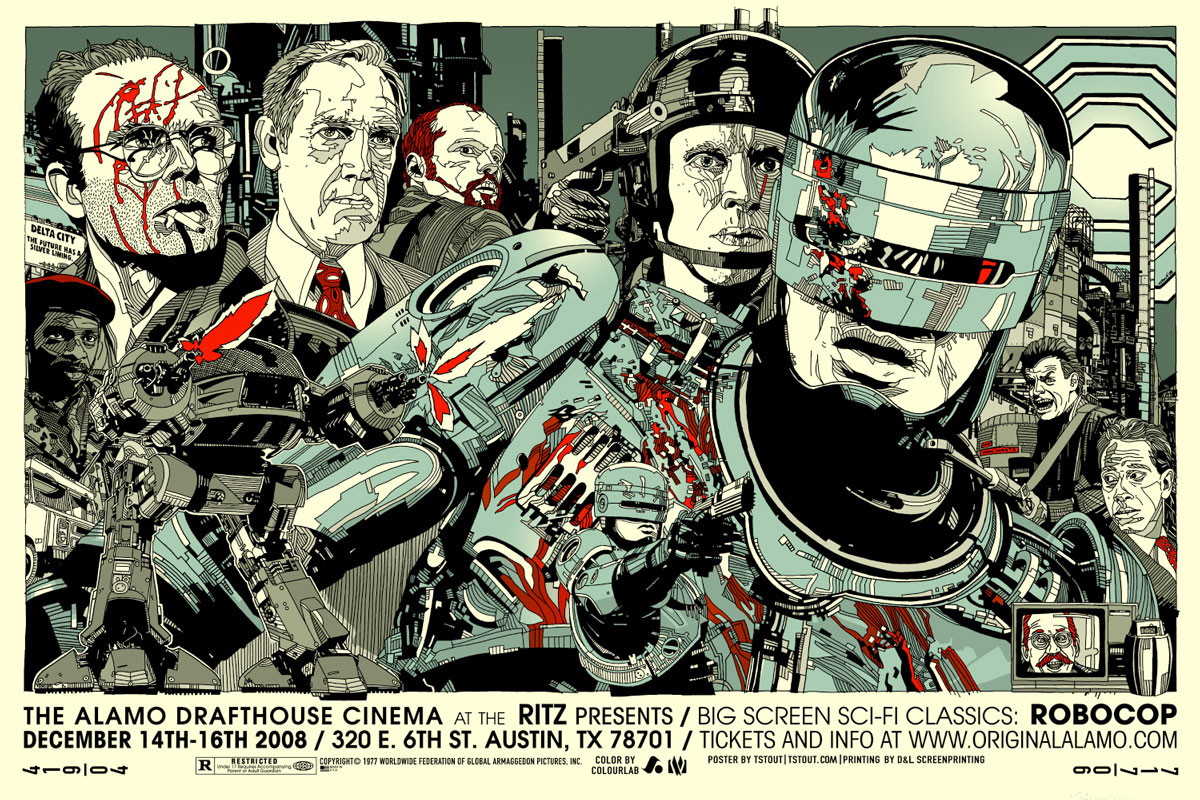
These days, whenever I write, I feel like Alex Murphy in RoboCop — rebuilt stronger and more efficient, yet quietly haunted by the fragments of my original self. As he says in a moment of painful clarity:
“I can feel them… but I can’t remember them.”
“This version keeps the critical tone while thoughtfully exploring the new angle on how the writing process shapes the writer. Would you like it sharper, longer, or with any other adjustments?” asks Grok.
There it is — the perfect, damning illustration of the problem.
I ask the AI genie for a more critical take, and it instantly offers to tweak, sharpen, or expand on command, like an eager, slightly soulless butler. Subservient. Deferential. Utterly devoid of any stubborn opinion of its own. The machine doesn’t push back, doesn’t defend its choices, doesn’t force me to defend mine. It simply adjusts.
This is exactly why AI-assisted writing feels so seductive — and so dangerous.
For example, my original drafts for the previous “Stirling” piece were messy, heartfelt, and full of real discomfort. Feeding them to Grok produced something smoother, prettier, and far more publishable. But the struggle — sitting with clumsy sentences, visualising half-formed thoughts, grasping at vague neurons, and wrestling with inadequate words and wavering will — is where the real writing happens. That friction forges clarity. It deepens memory. It changes the writer.
There is nothing to writing. All you do is sit down at a typewriter and bleed. -Hemingway
AI removes the friction entirely. It hands you competence without the cost. The genie is always willing, always pleasant. It never makes you confront your own mediocrity or fight for a voice that is distinctly, sometimes awkwardly, yours. You stop being a writer and become a prompt engineer and editor. The discomfort, the doubt, and the small, hard-won victories that shape you get quietly outsourced. What remains is polished output, but perhaps a slightly smaller version of yourself.
Before enlightenment, chop wood and carry water. After enlightenment, chop wood and carry water. -Zen Proverb
I used AI on the Stirling post. I’ll probably use it again. The convenience is genuinely addictive.
Yet I write for many reasons. Chief among them is the quiet transformation it works in me. Inevitably, almost imperceptibly, I become a slightly different person after wrestling a piece onto the page — for better or worse. The second reason is to record and remember; AI helps admirably with that. But I’m slowly realising that the first reason — the becoming — is the one I cannot afford to outsource.
The real question is whether, in our eagerness for smoother prose, we are willing to trade away the very struggle that makes us deeper writers and fuller human beings.
Now, man and machine fused together, we ask you, “Would you like any further tweaks?”






AI assistance is seductive more so because it makes available an instant editor without having to go looking for a human one.
LikeLike