Last night I watched the movie Snow White and the Huntsman — an adult take on the fairy tale that I enjoyed far more than I expected. It had a peculiar effect on me.
The film was shot partly in Scotland, Kent, and Wales, with generous helpings of CGI. I had braced myself for indifferent acting and an exploitative script. What I had not anticipated was the visceral punch I felt the moment the rain-swept vistas of Scotland appeared on screen.
I generally do not harbour regrets in life. There is one phase, though, that I rue: my sojourn in Stirling, Scotland.
I had arrived at Stirling station from London with a single suitcase, just as the summer of 2006 was quietly slipping away. I stayed for six months. Had I been better adjusted and possessed more conviction in myself, I might have planted myself there for good.
Some places don’t announce themselves with fanfare. They simply settle around you, stone by stone, raindrop by raindrop, until one day you realise you’ve been living inside a story that feels both ancient and strangely yours.
I had not yet fully understood the world. The milky-white mists that draped themselves like silken veils over the rolling green Ochils, the perpetual cold spray kissing the skin, and the wet cobblestones that gleamed like polished obsidian were too pristine, too pure for a still-cluttered mind. Beyond the town, the Scottish landscape unfolded in quiet, brooding majesty — vast sweeps of moorland and hill that shifted from emerald to burnished gold and then to muted browns as autumn took hold, with distant lochs appearing like dark mirrors reflecting the ever-changing skies. It was a land alive with old magic, where low clouds brushed the tops of ancient hills and the wind carried whispers from forgotten battles.
This is also one of the reasons I secretly wish Mira would study at the University of Stirling. To experience a world that comes closest to nature. It is an experience that changes human perspectives and priorities.
I lived in an old castle-like building right above Costa Coffee near the Thistles Shopping Centre. The contrast still makes me smile: thick grey stone walls that had probably witnessed centuries of Scottish weather and the occasional clan drama, now quietly overlooking the daily aroma of flat whites and the gentle hum of shoppers below. Those walls held the damp in with remarkable enthusiasm, but they also offered a stubborn kind of comfort.
On damp, cold mornings, the scent of coffee would drift up through the slightly open windows — a small, civilised nudge before stepping out into the day. I often sat on a drab but comfortable chair, savouring the icy drafts sneaking in through the gaps while the rest of the house stayed warm and toasty.
The weather was its own character in this town. I arrived as the last greens of summer faded and remained through the long, committed performance of the rainy season, right into the crisp opening notes of winter. Scottish rain is nothing like the dramatic, life-affirming downpours of home. It is softer, more persistent — an insidious drizzle that seeps into everything, turning cobbled streets into gleaming mirrors and the River Forth into a sullen pewter ribbon beneath brooding skies.
Umbrellas felt merely decorative. I learned to embrace waterproof layers and wellies, squelching along highways and fog-hidden hills. As autumn deepened, the days shortened with quiet efficiency, the light turning low and golden. Then came the first frosts, riming the edges of things with a delicate sparkle.
There was a strange beauty in those grey interludes: raindrops clinging to bare branches like tiny trembling jewels, mist softening the distant hills into shadowy outlines. The Scottish landscape is ethereal — wild, windswept, and impossibly tender all at once. On weekends, with a friend or alone, I walked along darkening streets and winding paths, still unaware of how far from home — how far from the world even — I truly was in that remote, fairy-tale setting. The hills seemed to breathe, their contours softened by drifting veils of cloud, while the occasional shaft of light would break through, setting the wet earth aglow like hidden treasure.
Today, I would have hiked all over those hills, explored the lochs whose still waters mirrored the sky, taken the ScotRail, and criss-crossed the entirety of that enchanted world. It was an opportunity of a lifetime. I was simply too young to fully appreciate what life had placed before me.
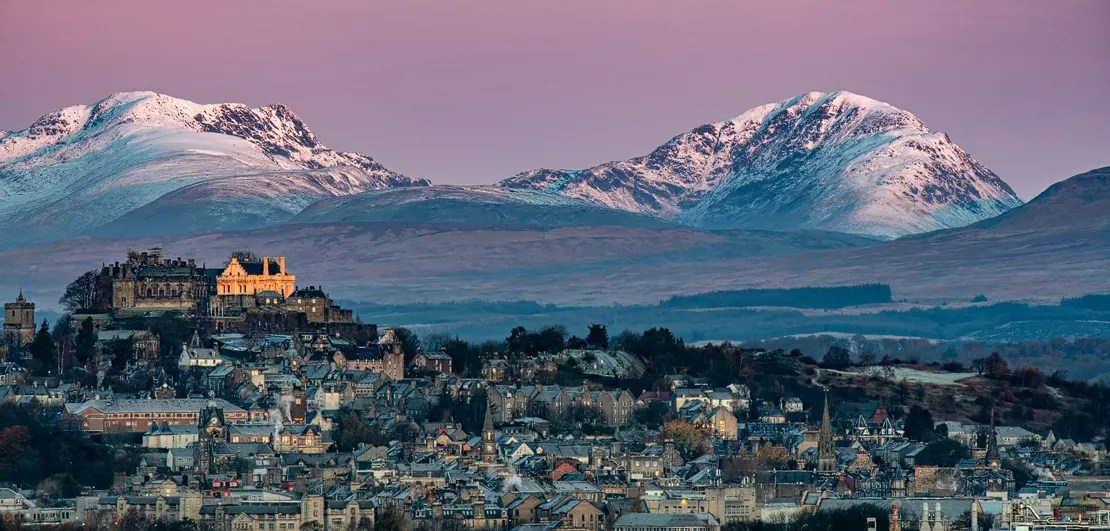
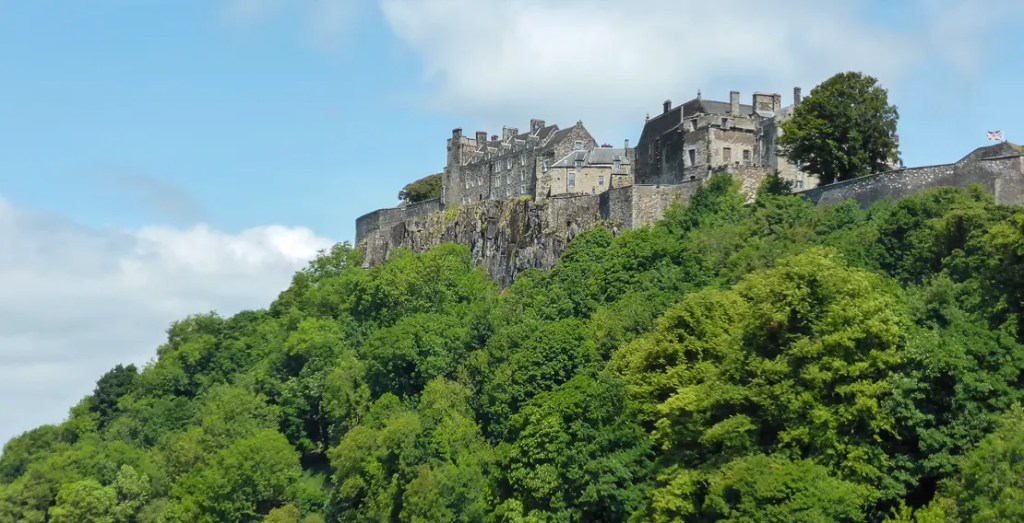
Not that I avoided Stirling town entirely. I was staying right at the foot of Stirling Castle — just a twenty-minute hike up the hill. The castle loomed on its volcanic crag like a watchful sentinel over the landscape that had once decided the fates of kingdoms. I wandered its ancient halls and ramparts, imagining the light footsteps of a young Mary Queen of Scots echoing through the royal apartments, or the weight of coronations and shadowed intrigues still lingering in the stone. Higher up, at the National Wallace Monument on Abbey Craig, I climbed the long spiral stairs — 246 of them, or perhaps a few more by the time my lungs registered their complaint — only to be rewarded with a view that stretched forever: rolling hills, the Ochils brooding in the distance, and the old battlefield where William Wallace made his defiant stand.
Six months is long enough to stop feeling like a visitor and start becoming part of the rhythm. Evenings often found me with a dram by the window, listening to the wind worrying at the old glass like a restless neighbour. The short days left space for reflection — not dramatic epiphanies, but the gentle realisation that life, much like Scottish weather, moves in seasons. You dress warmly, carry on, and trust that clearer skies will come.
Stirling didn’t try to dazzle. It had no need. It simply endured — solid, weathered, quietly magnificent — offering the kind of steadfast companionship that grows on you without fanfare. A place where a man could live above a coffee shop for half a year and leave feeling a little steadier than when he arrived.
If life ever grants you time in Stirling, take the slower path. Find an old building with character, surrender to the rain’s gentle tyranny, and let the stones speak in their own time. They’ve been listening far longer than any of us.
Who knew that an obscure movie could unearth one of my deepest regrets on an ordinary Saturday night?