Hampi is arid. A dry, deciduous surreal landscape of strewn boulders. If the myths and local lore claim it to be the Kishkinda of the vanaras, I can see why. Massive rocks lie scattered as if a giant hand has abandoned a game of marbles halfway through.
“Vali and Sugreeva used to play here with these stones…” Believable.
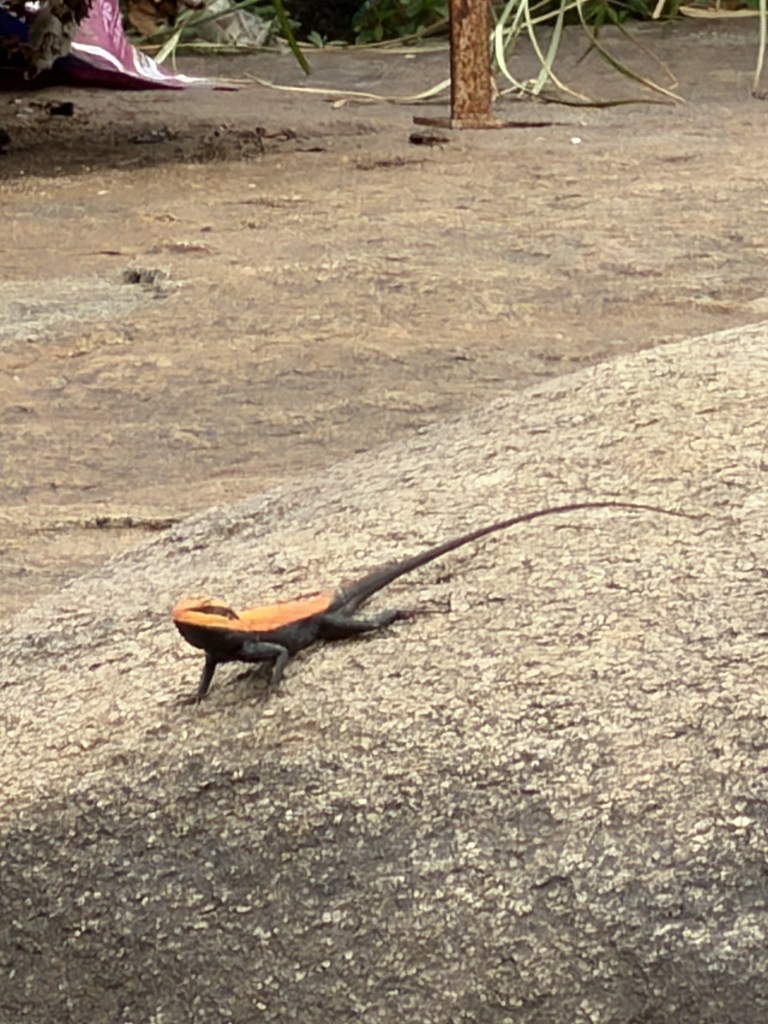
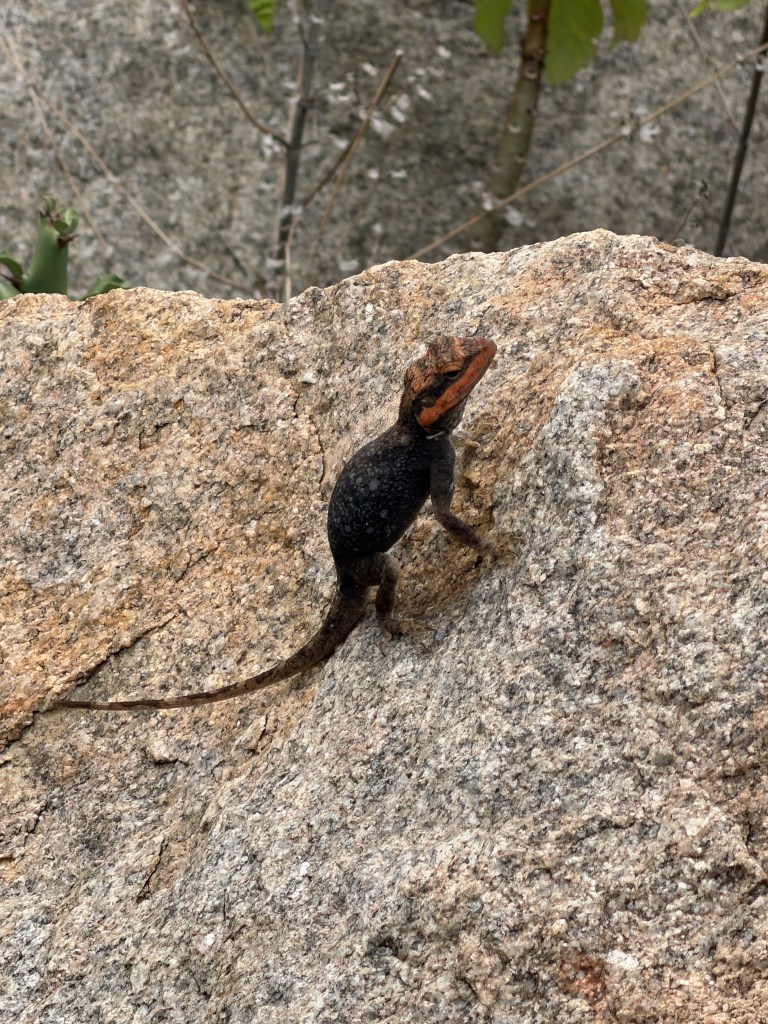
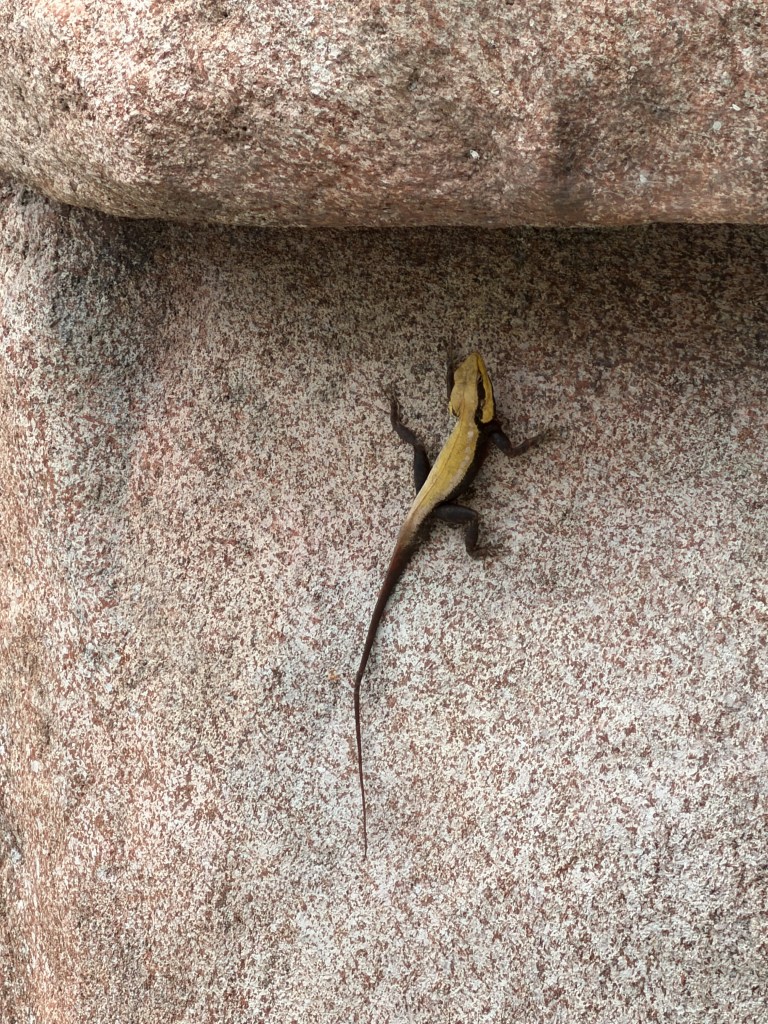
Rock agamas of brilliant hues bask on the sun-drenched stones, warming themselves and eyeing everyone with lazy indifference—lava red, deep rich blue, bright yellow. Creepy crawlies. Beauty crawlies.
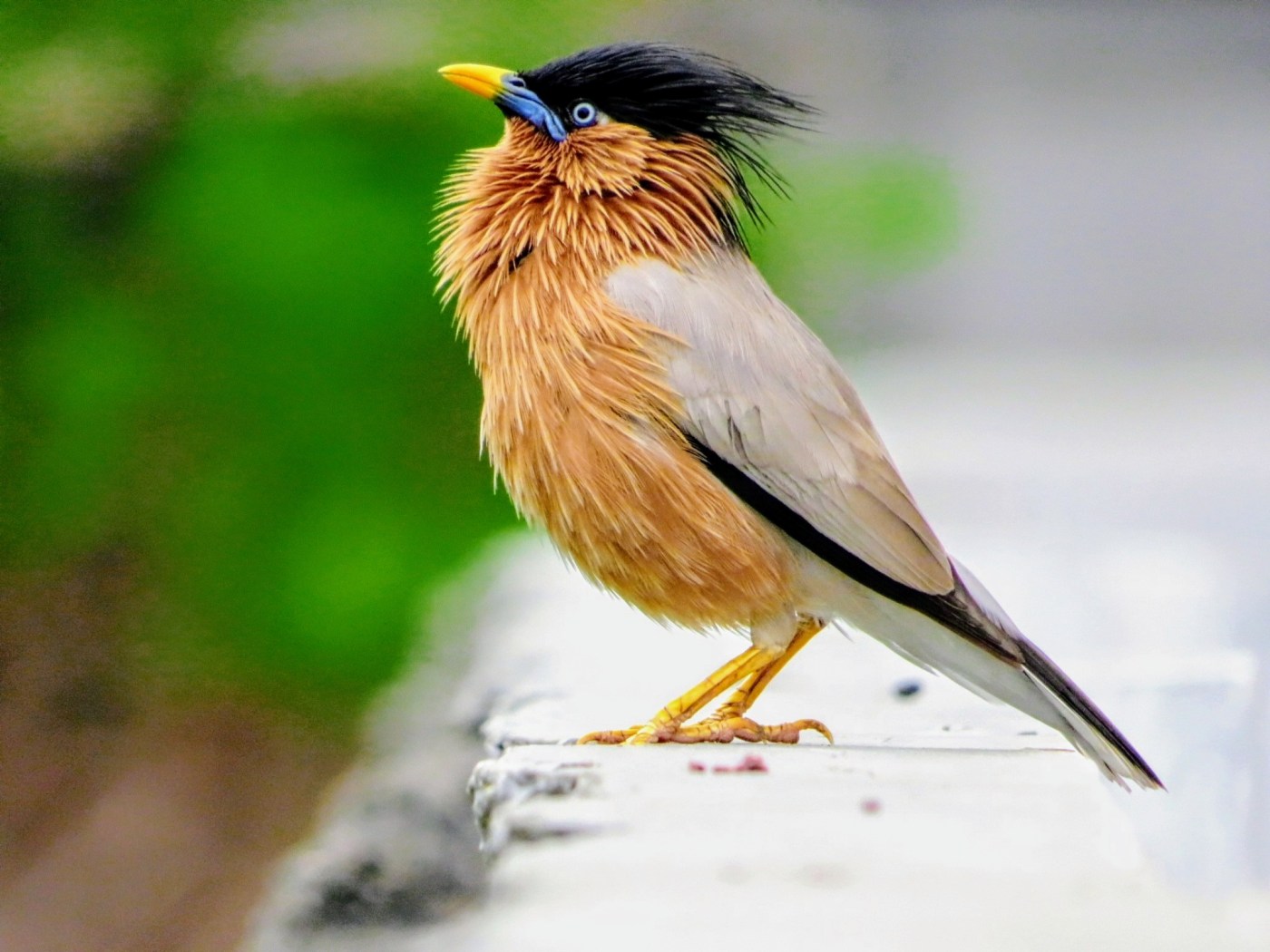
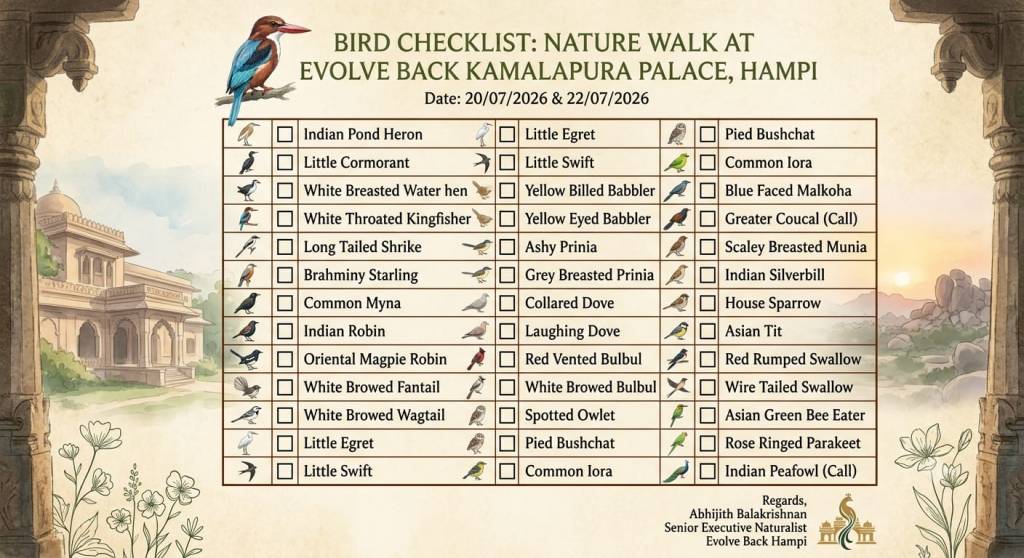
In Kamalapura, where we stay, Mira and I walk a lot, tallying birds and animals. The Brahminy starlings are my favourites. Upright little things, like orange muffin cakes with a comically serious expression, they are the true local stars. Their slicked-back head feathers turn fashionably unkempt the moment they face into the wind. Kind of like unhinged accountants returning home to secret lives of forbidden pains and pleasures after a frustrating day’s work.
Every time we go down to eat at the restaurant, the same family is grazing at the buffet. The patriarch reminds us of the Brahminy starling—his perennially windswept hair looking exactly like the starling staring into a gale. They even order masala dosa when pork chops and mutton biryani are on offer.
In a beautiful thorny acacia, a pair of spotted owlets nest. These cuties have been pushed from their original roost by the vermin of the air—the rock doves. The owlets’ yellow, watchful eyes follow us whenever we walk nearby.
The Indian pond heron is patient as ever: camouflaged grey when standing still on its stilts; a sudden billowing, pillowy white in flight.
Over three days of watching the little cormorant, I begin to believe it is the closest thing to a dinosaur among the birds I have seen. That prehistoric look is only heightened by its rather menacing pose with wings spread out to dry.
Our balcony overlooks a thicket of acacia and neem where I sight my first common iora. At first I think it is an acacia flower drifting down; then the round “flower” suddenly changes course, flies up in a sprightly arc, and vanishes back into the leaves. I lunge for my binoculars—glorified tin cans, but they focus decently at this distance. In the few seconds it takes to grab them, I hope, pray, and curse. Relief when the glasses finally lock onto the iora.
Maybe I should get a new pair of binoculars, I think again.
The long-tailed shrike is Mira’s favourite. Butcher bird. “That bird is psycho.” Yes, Mira, yes. Though she hasn’t met some of the humans I’ve met—especially certain relatives. Those ones don’t even have evolution as an excuse.
Abhijeet, our resident naturalist, is mildly impressed when Mira and I calmly rattle off our mynas, robins, wagtails, prinias and bee-eaters. He raises an eyebrow in appreciation when we spot a cinereous tit. But he is most impressed when, on our second outing, I reveal I am a Malayali who knows his hometown, Kumily.
After that, it is bird paradise.
He shows up early for the next walk, hands us a special pair of binoculars, leads us into the forests and introduces us to his paramours—the white-browed fantails and a blue-faced malkoha. We even hunt, unsuccessfully, for an eagle-owl that proves a master of disguise. Ruefully, the master naturalist admits the owl is a ninja par excellence in this landscape.
Before long, I am hung precariously over a dry bridge. “Can you see it?” he demands.
“What am I looking for?” I plead.
“Lean over more,” he commands
Abhijeet topples me further. Upside down, I catch sight of two pairs of curious eyes, a couple of wired vents, and the most deliciously coloured swallows—wire-tailed swallows. I swing back onto solid ground. He smiles triumphantly. I crawl back to my room.
The next morning another family joins the nature walk. They have commissioned a creaky buggy so they can sit and view the birds in comfort. Mira and I are too discreet to question it and turn to Abhijeet for succor. Abhijeet scowls at the driver, takes a spirited detour through the wetter parts of the landscape, climbs a few boulders, and thoroughly unsettles their lazy birding. Even I, a zero-mile birder, am awestruck by the guests: full marks for zero-mile-ing, zero marks for birding, extra points deducted for thick-skinned brazenness.
That night in the buffet line, I effortlessly plow through them all for the last piece of Guntur fried chicken. There is no honor within the food chain.
Or in a buffet line.
House sparrows are everywhere on the property. Their cousins, the scaly-breasted munias, forage in small flocks. Through the Nikon binoculars, their scales show up in glorious, meticulously layered detail.
I am always amazed at how rich the natural world is. I grow envious of people who have chosen to build their lives around it. I get enamoured of their backgrounds and experiences, buy a stack of colourful books in a bid to edge closer to that life, and earn sideways glances from my family.
Nature walks are becoming therapy. I am starting to like the rhythms. I am learning to love the fragility of these ecosystems. Mostly I am learning that studying nature is an excellent way to confront and resolve my own problems.
Abhijeet lets drop a suggestion about the Nikon Prostaff P7 with a conspiratorial undertone not unlike being recruited into the secret circle that plotted against Caesar.
I bite. I order them.





Leave a Reply