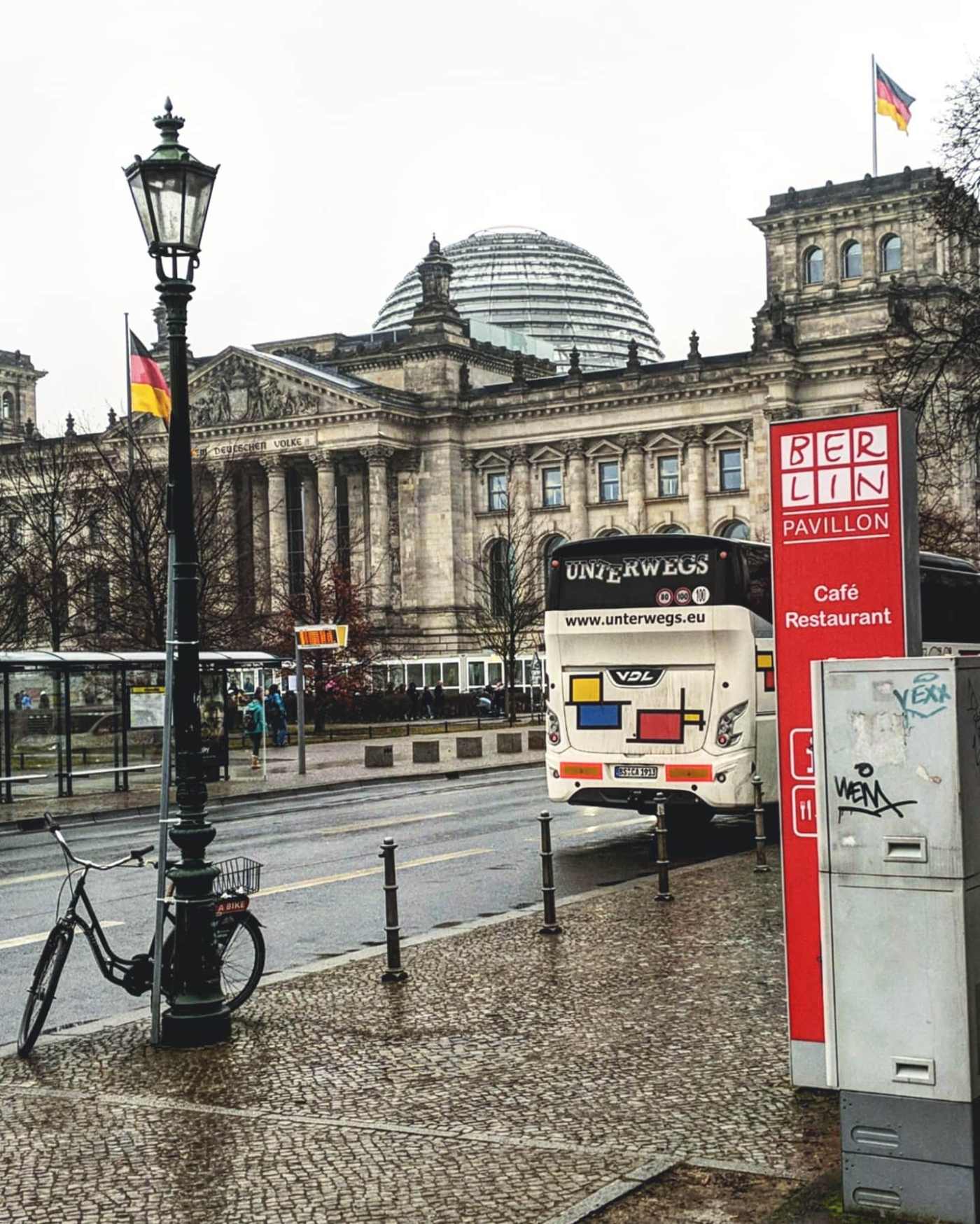
Earlier this year I had the chance to visit Berlin. It has been about 3 months and I have not gotten the opportunity nor made the time to write about Berlin. The trip is now quickly fading from my memory, threatening to leave behind the usual vague remembrances of travel impressions.
Berlin was bitterly cold in January.
A thin Uniqlo down jacket, coupled with a sweater, boots, souvenir-store-bought glove and cap, and a pack of coughy Marlboro cigarettes – I was ready to brave the German cold. Throughout the week, whenever I could get time outside work, I walked, visited museums, and took tours of the city to try and understand Kollektivschuld. I wanted to understand the depth and authenticity of collective guilt that modern German society has embalmed into the cityscape.
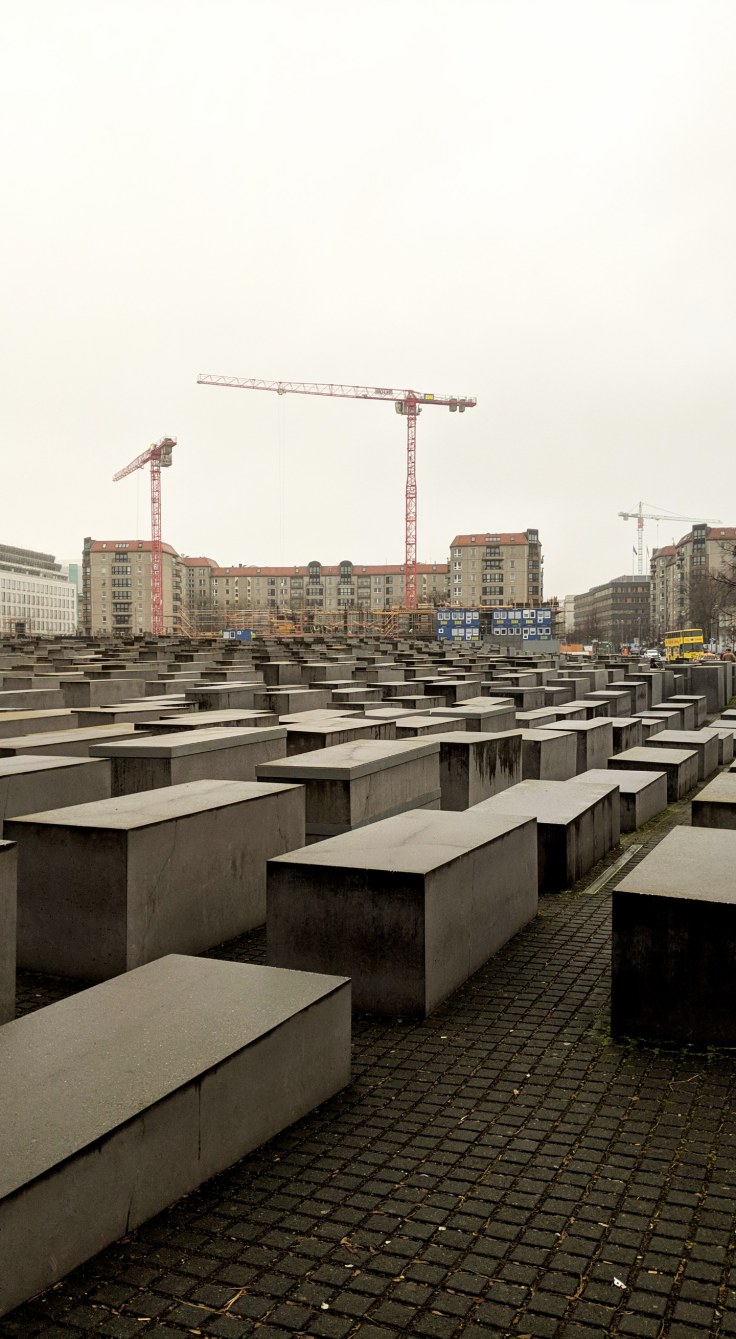
Just beyond Alexanderplatz, across the road with BMWs and Volkswagons motoring by, I came across an expanse of concrete coffins. In the cold grey afternoon, I did not have to guess what they were. I imagined there would be names listed, followed by hyphenated dates. The usual oversized, ostentatious, inadequate national apology for lost lives. None of the drivers in the cars that passed me seemed to be paying particular attention to those tombs except as another traffic light to navigate through.
After a couple of cigarettes, I saw a young couple pause between the structures, adjust their positions and poses for optimal light and composition, freeze for a few seconds unnaturally, click a photo, and disappear into the maze.
One nation’s guilt is another tourist’s backdrop art I guess.
Berlin seems condemned to bear the burden of carrying the crucifix for the sins that its citizens had wreaked on their fellow humans.
A short distance further, in Alexanderplatz, stood an unremarkable stone structure that was later pointed out to me as remnants of what was once the Berlin Wall. A little further down was Checkpoint Charlie. A little to the right was the Holocaust Museum. A little to the left was the German Spy Museum. Scattered between these institutions were signs of human amnesia.
Currywurst places promising authentic flavors and a Nivea showroom with the friendly bear mascot assuring passersby of better skin.
Berlin was starting to feel like a repentant adult, whose only expression of apology was to lower their gaze, sweep away the debris of precious houseware smashed into the walls in anger, and the occasional penitent gesture of going to the store or doing the chores – a prosaic reminder that they haven’t forgotten the time they flailed their fists onto those they could have protected.
I knew I was missing the essence of the city though. Everywhere there were signs of anti-fascism. Anti-establishment messages were scrawled onto walls close to the parliament. Signs of the Nazi rule were removed from the physical spaces, but so as not to forget their shame, frozen in time in black and white photographs in war museums.
I could not help but observe that the land seems to have taken up a disproportionate share of atoning for the sins of society.
I realized that Berlin has warmth too.
It took me 5 minutes and a passport, to get into the glass dome that overlooks the Reichstag. Symbolizing a characteristically clinical approach to solving obsessive guilt, the transparent dome sits above the people’s representatives, a curious architectural anomaly of transparent democratic oversight.
I want to think that young Berliners, with hair over their eyes, casually dressed, with fishnetted stockings and basketball caps, who seemed more organic and less pasty than how I remembered Americans, remember why this glass dome sits atop the guarded building.





 The Reluctant Book Worm
Leave a comment