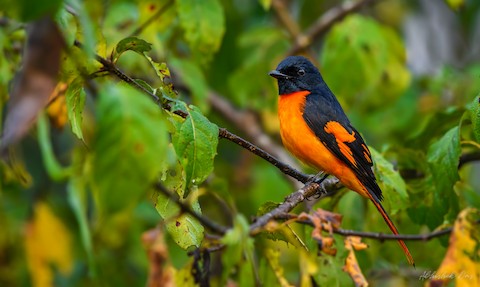
Just two days back, I drove 300 kilometers back home with a broken foot. All because of an Orange Minivet.
Wherever I stopped on the way, mostly for waterbreaks, I hobbled out, leaning my weight on my car, wincing with pain. Despite the gritting of teeth and sweat pouring down my back, I was ecstatic.
Life is like that sometimes. Our physiognomy and expressions don’t really reflect our inner state.
Orange Minivets. Pericrocotus flammeus. A dazzling firecracker of the Western Ghats and Sri Lanka’s treetops!
Peri – Very; Crocotus – Saffron Colored; and, in case someone is colorblind, there is the added Flammeus – Flame – colored.
Picture a bird that looks like someone dipped half of it in molten lava and the other half in midnight ink—that’s the classic orange minivet look. Glossy jet-black head, throat, and upper back flow into a screaming orange-red rump, lower back, and underparts that practically glow against the green canopy. At about 20 cm long and a feather-light 20–24 grams, it streams a long tail like a comet. One moment it perches quietly; the next it bounds through the air in that signature minivet bounce, resembling a flying flame billowing between branches.
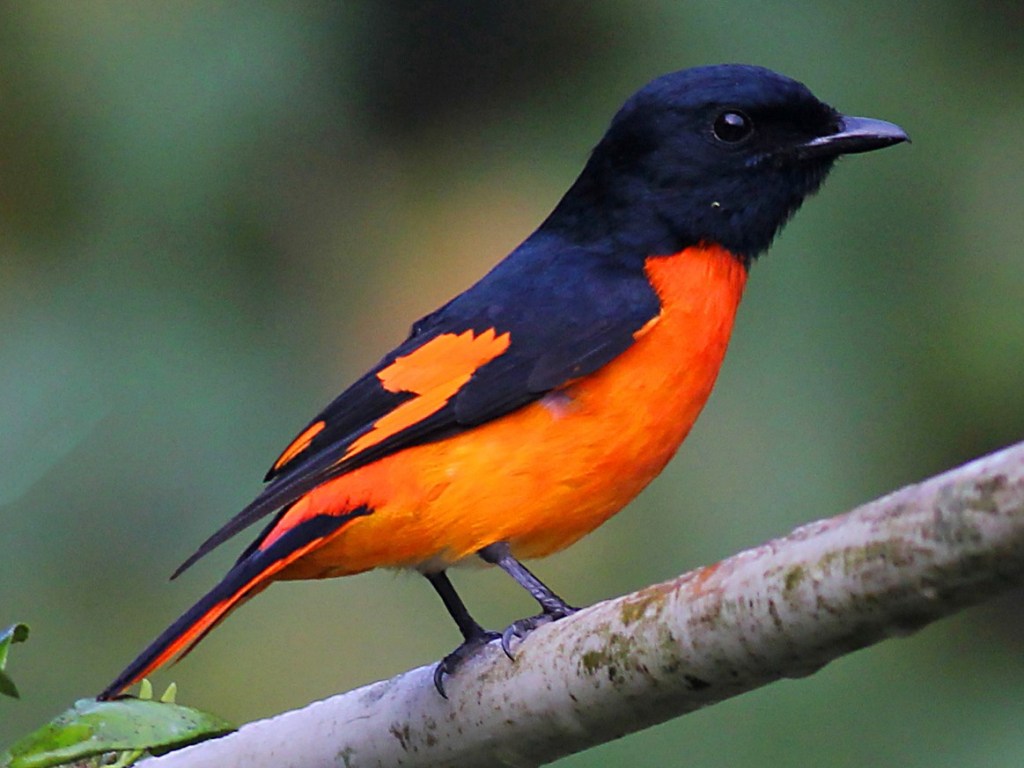
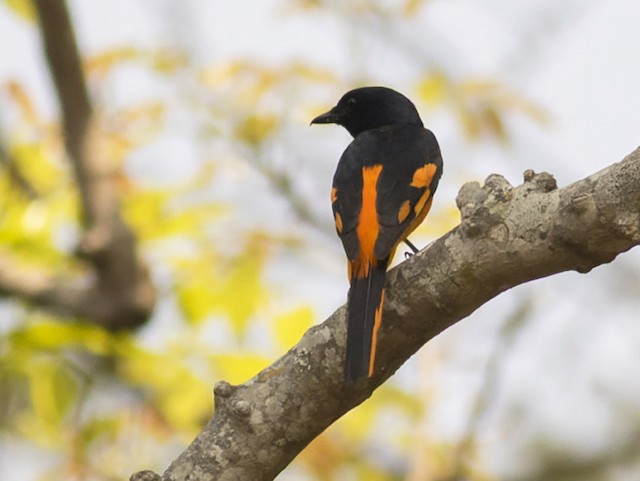
Pastels are for weaklings
The female version stays understated yet stunning—mostly soft grey above with a sunny yellow wash, where the male shows fiery orange. Yellow forehead, bright yellow underparts, grey back—it brings elegance to the pair’s explosive energy. Together, they prove couples don’t need matching outfits to steal the show; complementary vibes work just fine. Juveniles start out resembling the yellow-grey style, gradually earning brighter colors like teenagers waiting for their glow-up.
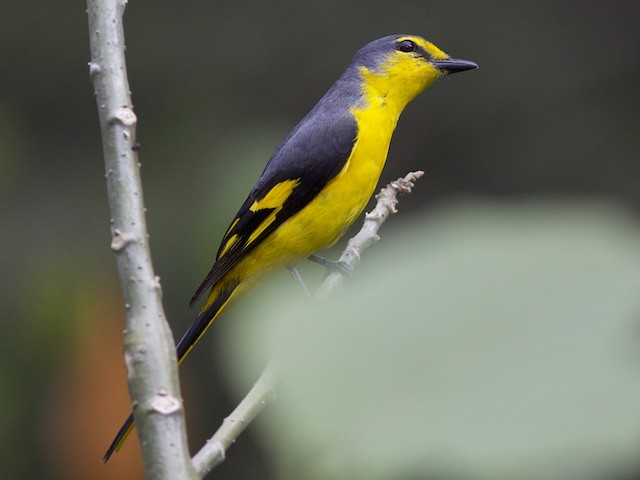
Not to be outdone. The female orange minivet makes a powerful case for renaming the species.
These birds are canopy party animals. Gregarious to the core, they zip around in small flocks—sometimes mixing with other feathered friends in mixed-species gangs—hawking insects mid-air with acrobatic swoops. Think of them as the forest’s aerial pest-control squad: caterpillars, beetles, flying termites, they’re all on the menu. The call is a high-pitched, bubbly twitter—”weeeep weeeep”—like champagne bubbles popping way up in the trees.
Deep in Sakleshpur, we were walking along a coffee plantation bordering some forestland.
“Watch out for Gaurs. If you come across any, just stand still. You don’t have to worry about leopards. They are only out late at night.”
It is a testament to the electric personality of an orange minivet that, even with such grave warnings, one walks around with eyes scanning the forest’s tree tops rather than the undergrowth for potential big game. Somewhere in that walk, I must have twisted my ankle.
I didn’t notice anything untoward then.
There were a couple of orange minivets cavorting about, and it was getting dark. I was busy feasting on the sight of the birds.
Apparently, these minivets thrive in everything from steamy lowland jungles to cooler montane forests (up to about 2000 m) and stay year-round, though some shift altitudes with the seasons. This gives me hope. All I have to do is put in a little more effort to scout them out whenever I am in the vicinity.
Another reminder that ecstasy is just a treetop away.
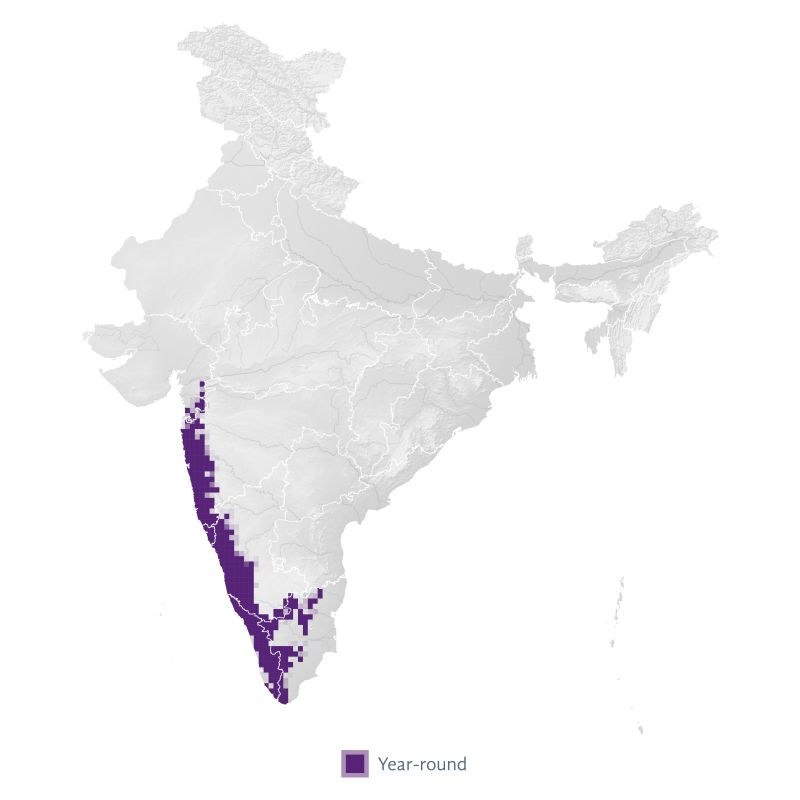
Orange minivets are endemic to regions right near home.
Later that night, I was nursing my ankle, wondering if I had a fracture. I couldn’t take a chance and so decided to drive down, cutting short a trip that I had been looking forward to.
Such is life. I pocketed the win and drove back home. I was glad when my X-ray revealed that it was just a ligament pull, even if the pain was intolerable. I felt guilty that I could afford to be so happy in a hospital in a wheelchair, when the others in the hospital were dealing with illnesses that couldn’t be perspective-shifted to such positives.
Last year, in the semi-arid brushes of Northern Sri Lanka, I spotted a tangerine bird, flitting away. I was offended when the guide told me it was a small minivet (Pericrocotus cinnamomeus). I was offended because I thought the scientific world had missed an opportunity to name it something spectacular like an “orange minivet” or the “scarlet minivet” or even the “very orange minivet” or even an “outrageously orange minivet”. After all, we are talking about a field where some of the accepted names are “cinderella waxbill” (Glaucestrilda thomensis), “fluffy-backed tit-babbler” (Macronus ptilosus), and “shining sunbeam”(Aglaeactis cupripennis).
I carried that slight for a year—until I met the real heavyweights of the minivet family. The true Orange Minivet (Pericrocotus flammeus), oranger than the Small Minivet, and the Scarlet Minivet (Pericrocotus speciosus), scarleter still.
Both far more outrageous.
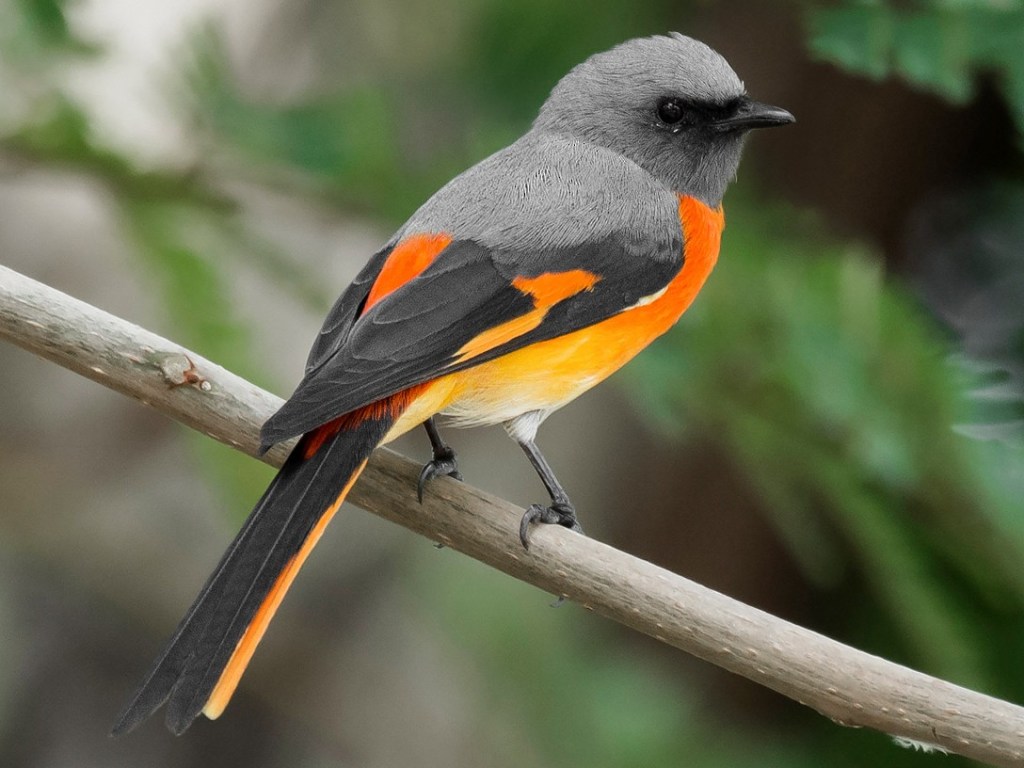
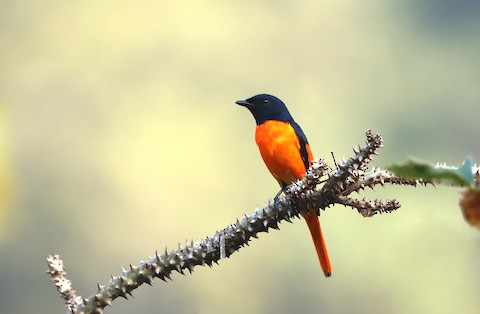
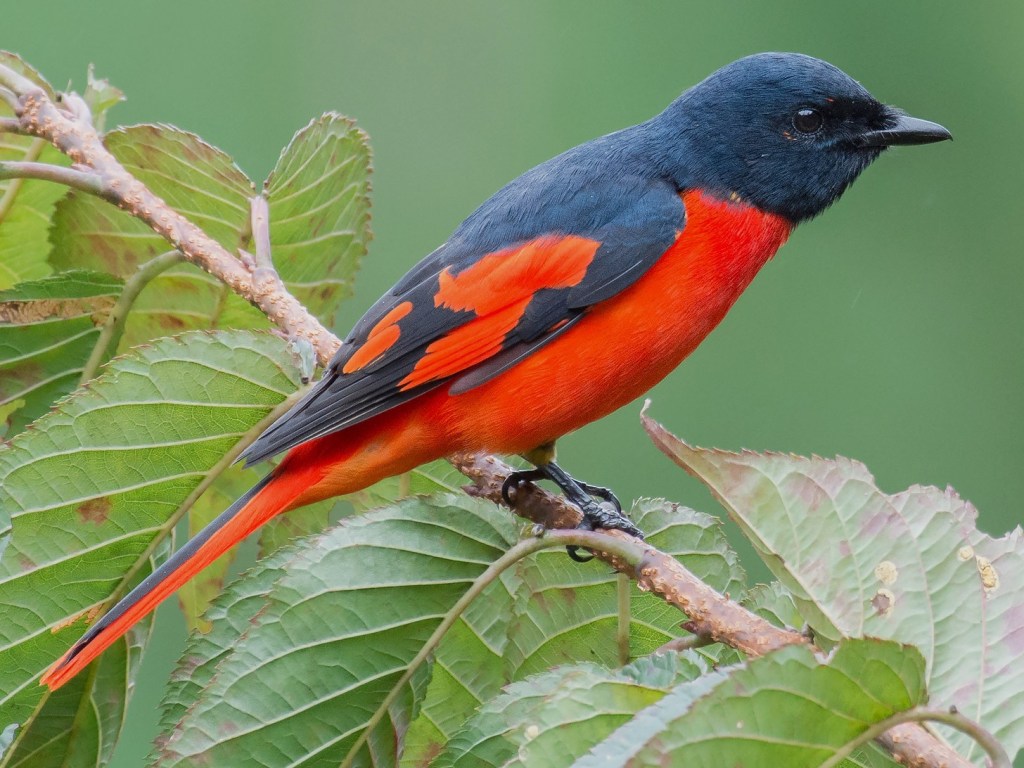
The Marmalade Scale: From cinnamon to ruby: Small Minivet; Orange Minivet; and the Scarlet Minivet.




 The Reluctant Book Worm
Leave a comment