Bangalore has been especially cold this year. Most early mornings for the past two months, I have been surviving with a steaming cup of golden-brown kattan tea and a shawl wrapped around me.
Last week, I picked up Jim Corbett’s Man-Eaters of Kumaon—it’s gripping stuff: those tense stalks through the Kumaon hills, the way Corbett captures fear gripping entire villages. But something about the “Shikari of the Raj” narrative felt a little off-putting.
All said and done, however, it’s worth a read—especially if life doesn’t grant you real tiger sightings.
Corbett took down quite a few tigers (and leopards, and king cobras), though they were confirmed man-eaters terrorizing people. I found myself wondering: was there really no other way? He clearly respected the law of the jungle more than rigid human rules—he saw these animals as majestic until they crossed into human territory —and was stoic in his joy at killing the tigers.
“A tiger is a large-hearted gentleman with boundless courage, and when he is exterminated—as exterminated he will be unless public opinion rallies to his support—India will be the poorer by having lost the finest of her fauna.” — Jim Corbett
Later in life, Corbett traded his gun for a camera and became a passionate advocate for conservation. (Locals affectionately called him “Carpet Saab.”) Just after Indian Independence in 1947, he emigrated to Kenya with his sister, fearing the uncertain political climate and that Anglo-Indians like them might become second-class citizens in the new India.
I still haven’t fully decided whether that choice was right or wrong.
Those discomforts led me to Simon Barnes’ A History of the World in 100 Animals. Barnes, another English Naturalist, confronts the “man-eating” trope head-on, particularly in lions. We love the myth: only injured, old, or “depraved” big cats turn to humans—it’s aberrant, against nature’s order.
Barnes calls nonsense on that.
He points out that man-eating isn’t some rare moral failing; it’s opportunistic behavior that emerges when prey is scarce or easy targets appear (think the infamous Tsavo lions during railway construction). It flips the script: maybe we’re not innocent victims of rogue beasts, but part of the same food web where boundaries blur.
Reading Barnes after Corbett felt like a gentle corrective—less judgment on hunter or hunted, more understanding of how intertwined we all are.
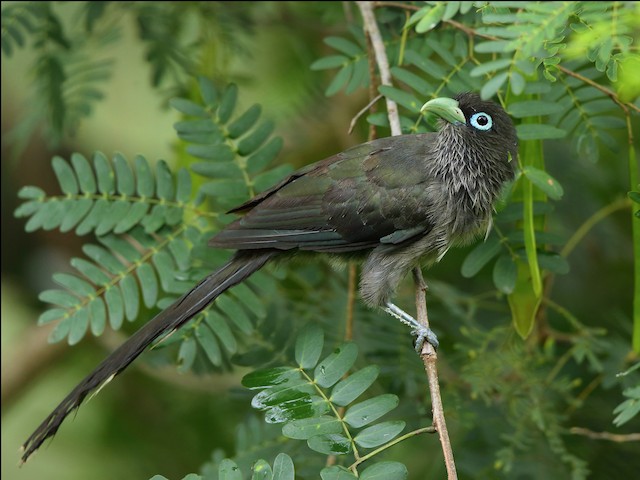
Far less noticed by big-cat enthusiasts are the quieter animals sharing our landscapes, like the blue-faced malkoha. No man-eating scandals or chest-thumping tales here—just a bird that struts through the undergrowth with meek followers trailing its antics.
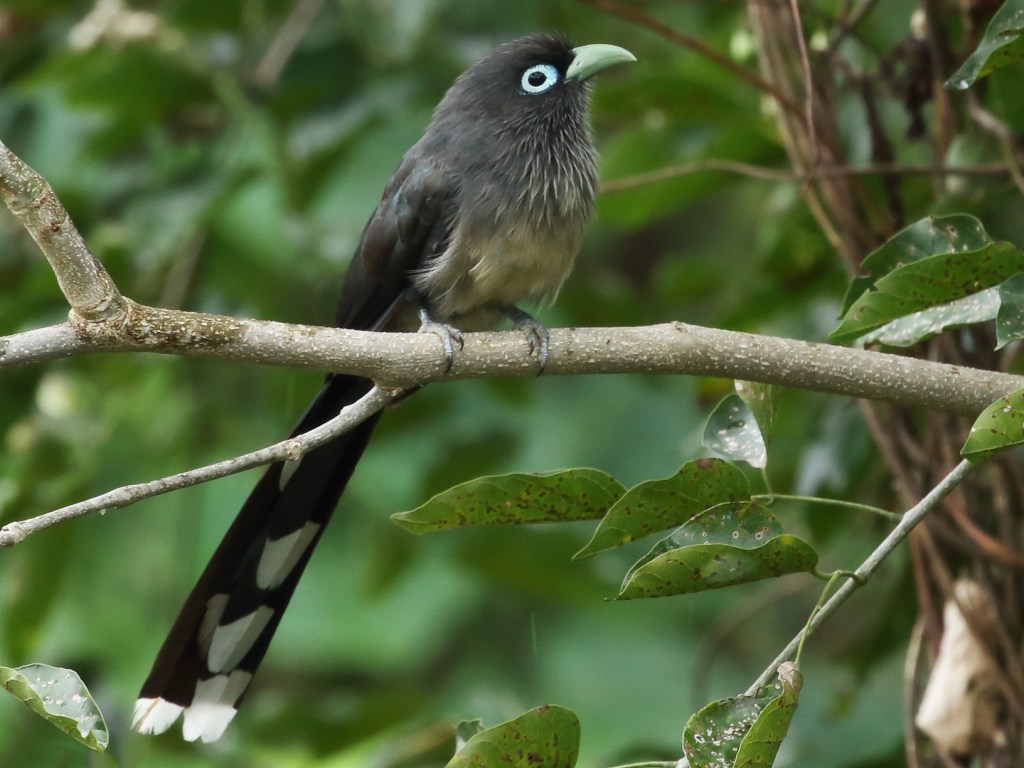
It’s one of those special rewards in the right habitat: sneaky in thorny scrub, but once you catch that electric-blue face flashing through the undergrowth, it’s unforgettable.
Wilpattu’s dense dry-zone forests, thorny thickets, and signature “villu” (natural lakes) offer perfect cover for its clambering, insect-hunting style—birders regularly report it there on safaris. It’s more widespread in Sri Lanka’s lowland plains, though not always easy to spot.
The blue-faced malkoha darted into the bramble as I sat in our tent. Even at first glance, it was a showstopper. One shouldn’t compare birds (unless for science, of course), but I couldn’t help noticing how its contours and habits echoed my favorite local, the jaunty greater coucal.
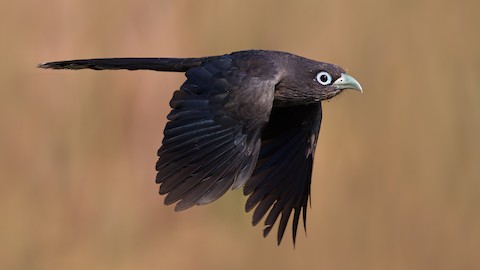
A sleek cuckoo (about 39 cm long, mostly tail), the malkoha is an endemic gem of peninsular India’s dry deciduous forests, thorny scrub, and second-growth thickets, as well as Sri Lanka’s lowlands. Glossy dark grey-blue plumage with an oily green sheen; a dramatically graduated tail with white tips that flick like streamers. But the face? Pure electric drama: a bold ring of turquoise-blue bare skin around the eyes, red iris, and glowing apple-green bill.
It’s as if the bird discovered jungle makeup tutorials and decided subtlety was for others.
Unlike parasitic cuckoos, the blue-faced malkoha is a responsible parent—builds its own nest, raises its own chicks. It forages low in tangled understory, clambering and hopping ninja-style through thorns that would shred anything less agile. Flight feels secondary; stealth-scrambling is primary. Diet’s pure opportunist: hairy caterpillars, beetles, grasshoppers, the odd lizard or frog, maybe berries. If it’s small, moving, and edible, it’s on the menu.
Vocalizations are understated for such a looker—mostly silent and mysterious, but if startled, a low grumpy “kraa” escapes, like a tiny crow muttering about traffic.
In a world obsessed with big predators and human-wildlife conflict, the malkoha reminds us that nature has quieter stars: shy, flashy, independent, and perfectly content in the scrub without bothering anyone.
Every time I see one, I’m reminded—through some odd associative leap—of malpua. A touch of malpua with clotted cream is the perfect remedy for any ache. Jim Corbett should have tried some. He might not have left so easily.
Corbett might have been a better big-game hunter in India. Me? I can hold my own against him in hunting down desserts.




 The Reluctant Book Worm
Leave a comment