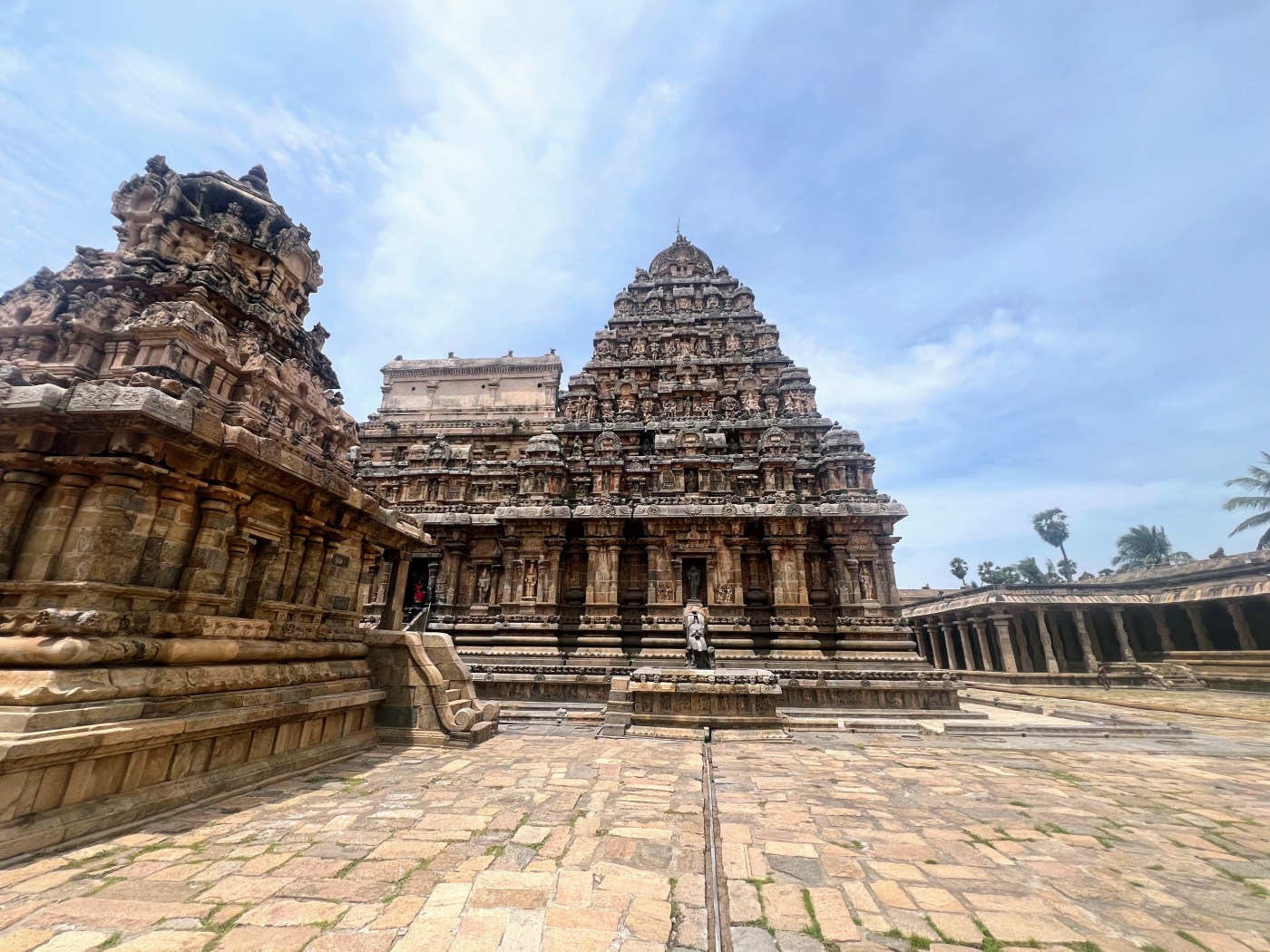
The Airavateswara Temple in Darasuram, the final stop in my journey through the three UNESCO Great Living Chola Temples, left an indelible mark on my soul. Having earlier marveled at the grandeur of the Periya Koil in Tanjavur and the Brihadeesvara Temple in Gangai Konda Cholapuram, I found Darasuram to be a distinct yet equally captivating chapter in the Chola architectural saga.
The Cholas, under the visionary reigns of Rajaraja Chola I and Rajendra Chola I, crafted temple complexes that redefined architectural conventions, creating some of the largest free-standing structures of their time, rivaled only by the Pyramids of Giza. These temples, scattered across southern India, from the Domlur Chokkanathaswamy temple nearer home to countless others in various states of preservation, are a testament to their ingenuity.
Lavishly adorned, rich in symbolism, and masterful in their exploration of space, symmetry, and alignment, the Brihadeesvara temples in Tanjavur and Gangai Konda Cholapuram soar with monumental ambition.
I was eager to discover how Rajaraja Chola II’s artisans at Airavateswara chose to etch their legacy into eternity.
Among those who have visited the Great Chola Temples, Airavateswara invariably sparks a reverent pause.
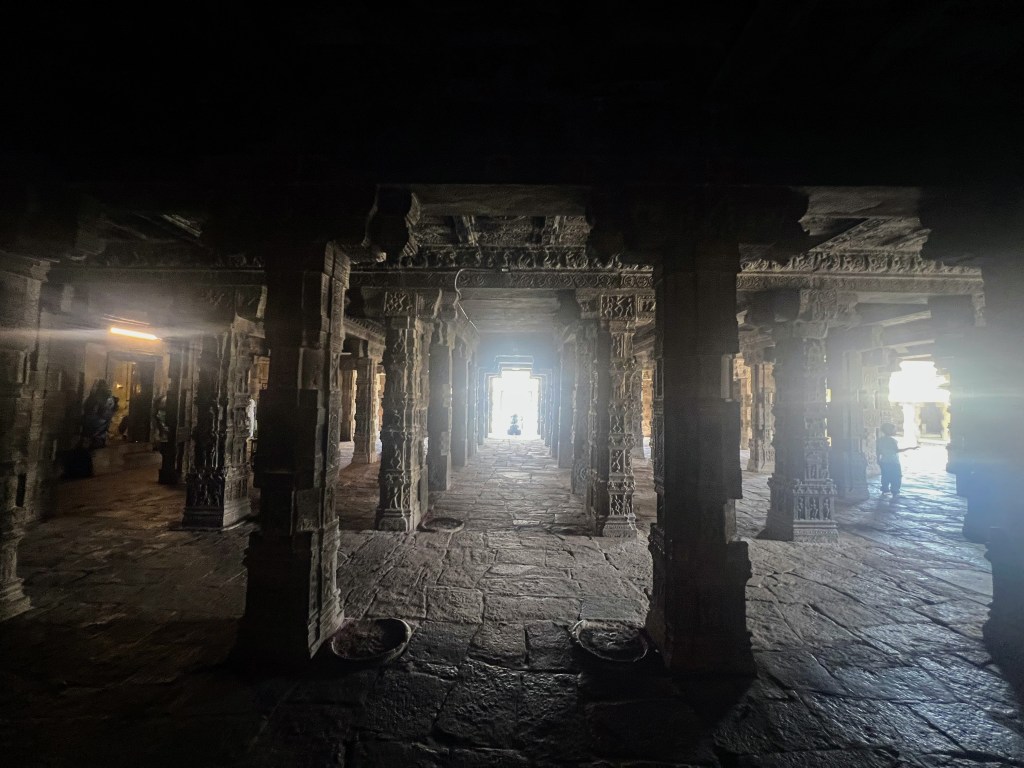
“But the Airavateshwara temple…” they begin, trailing off in awed recollection, met with knowing nods from fellow pilgrims. Its sculptural profusion—delicate, deliberate, and abundant—sets it apart. The temple exudes a serene, unhurried aesthetic, as if time itself slows within its precincts, inviting contemplation.
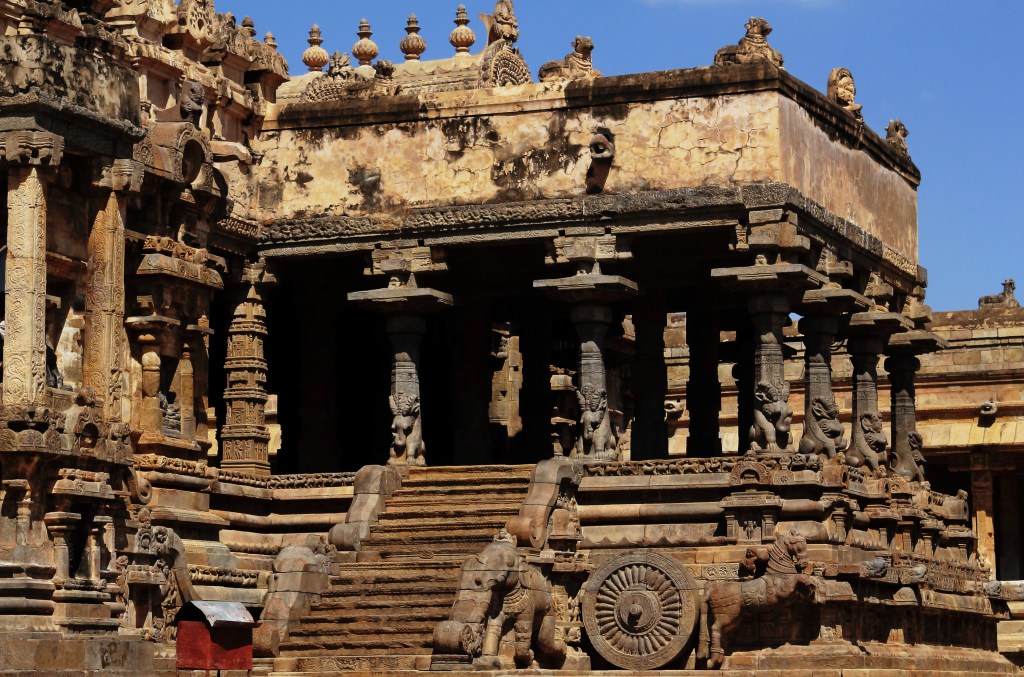
Unlike the towering vimanas of Tanjavur and Gangai Konda Cholapuram, visible from streets away, the Airavateswara Temple reveals itself more subtly. From the parking lot, no lofty structure pierces the skyline, a stark contrast to its counterparts. Yet, as I stepped into the temple compound, all expectations were surpassed. The temple is a living tapestry of sculptures, each intricately carved with a precision that speaks of quality over quantity. Where the Brihadeesvara temples overwhelm with scale, Airavateswara enchants with refinement. Its granite, unyielding and without the polished sheen of, say, the Hoysala soapstone, bears the marks of Chola artisans who bent this stubborn stone to their will with sheer determination.
Standing amidst this grandeur, surrounded by craftsmanship that has endured a millennium, I felt a profound connection to India’s civilizational heritage. These temples are not merely relics; they are bold assertions of cultural supremacy, capable of standing toe-to-toe with any architectural marvel in the world—and often surpassing them. Yet, this pride is tempered by a sobering reality. The dilapidated bathrooms outside, reeking of ammonia and strewn with filth, stand in stark contrast to the temple’s timeless beauty. Locals touch and lean on delicate millennium-old sculptures, unaware of the irreparable damage they inflict. Guides recount tales of invaders defacing sacred spaces but remain silent on the modern Indian who seeks a corner to urinate or clings to a fragile statue for a selfie.
This paradox raises uncomfortable questions. Why does it take a global organization like UNESCO to champion the restoration and appreciation of our own heritage? We speculate about what might have been had invasions and colonial occupations not scarred our history, yet over 200 Chola temples lie crumbling across India, neglected by those who live in their shadow. The fault is not external; it is solely ours.
This journey has kindled in me a deep love for India’s history and temple architecture. Though I’ve long held an interest in history and geography, I had never before ventured into the field with the sole purpose of immersing myself in India’s cultural legacy. I am wary of slipping into the cliché of the middle-aged NRI, rediscovering roots under saffron skies, waxing nostalgic about a glorious past. I strive to keep politics at bay, approaching history with love and curiosity, free from malice or agenda.
As I stood in the quiet embrace of Airavateswara, I realized that these temples are not just monuments but mirrors—reflecting both our previous greatness and our current shortcomings. They call us to honor our heritage not with blind reverence but with active stewardship.




 The Reluctant Book Worm
Spectacular description. Damn, you are a wordsmith to say the least. Makes me want to visit these ancient wonders.
LikeLike