Anuradhapura. The Ancient Buddhist City
The first thing that struck me in Anuradhapura – Sri Lanka’s ancient capital (4th century BCE–11th century CE) – was the lotus-covered ponds flanking the roads. Lilies and lotuses bobbed gently in the still waters, their delicate petals a vivid contrast to the earthy surroundings. In Theravada Buddhism, the lotus embodies purity, enlightenment, and the soul’s potential to rise untainted from the mire of worldly suffering. Like the lotus, we too must transcend human struggles to find clarity.

Anuradhapura radiates a serene, timeless energy. Ancient cities carry the weight of their history, and here, stupas and pagodas dot the landscape, whispering of the city’s past grandeur.
That stateliness remains undiminished, woven into the very air.
Anuradhapura was a marvel of hydraulic civilization. It had an incredibly sophisticated water management system, featuring vast reservoirs like Tissa Wewa and intricate networks of canals, which supported thriving agriculture and sustained a flourishing urban society. These engineering feats, harmonized with Buddhist principles, powered the city’s economic and cultural dominance.
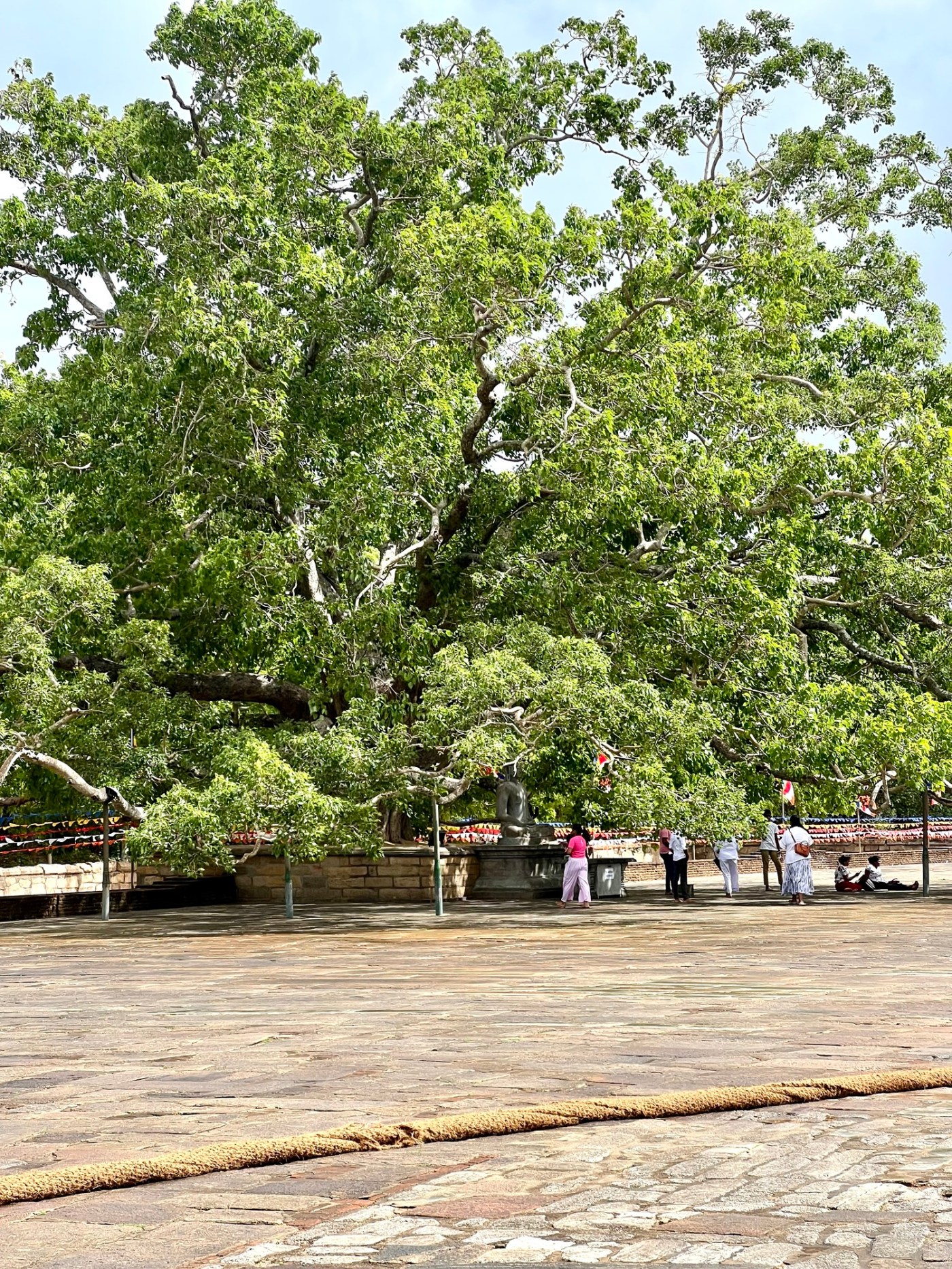
At the heart of this sacred city stands the Jaya Sri Maha Bodhi tree, said to have been planted by Princess Sangamitra, daughter of Emperor Ashoka. Its gnarled branches, heavy with history, stretch skyward. Sangamitra’s brother, Prince Mahindra, first brought Buddha’s teachings to Anuradhapura, and his sister followed, carrying a sapling from the original Bodhi tree.
Her name—Sangamitra, “friend of the Sangha”—captivates me. For a princess, it is strikingly humble, free of the pomp that often cloaks royalty. While some rulers, like the Cholas with their towering temples, sought greatness through grandeur, Ashoka and Sangamitra found it in service and humility.
On the day I visited, devotees in white robes thronged the sacred grounds, their arms laden with offerings—watermelons, rice, and sweets wrapped in molasses-orange cellophane. Silence enveloped the crowd, broken only by the soft patter of bare feet on stone and sand or the occasional hushed call for a lost family member.
Closing my eyes, I could feel a gentle rhythm.
Modern Sri Lankan Buddhism sometimes carries a militant edge, aligning with politicians who wield it against minorities. Yet, beneath the Jaya Sri Maha Bodhi, such tensions seemed distant. The tree’s leaves rustled softly.
Beyond the sacred grounds, sprawling lawns cradle ancient ruins.
Malabar Pied Hornbills perched in the towering trees, their bold eyes scanning the sea of pilgrims below. One swooped to an offering of rice, deftly tossing a rice ball into the air with its unwieldy beak before swallowing it whole. Unlike sacred sites in India, where litter and vanity often overshadow devotion, Anuradhapura’s visitors seemed wholly absorbed in prayer.
At the city’s northern edge lies Abhayagiri Vihara, a sprawling monastery founded around 2 BCE. Once a cultural and political hub, its ruins stretch across the landscape, whispering of a millennium of influence. In the afternoon, Mira and I wandered to the nearby elephant pond, where a lone monitor lizard glided through the water. We chased it along the pool’s edge, but each time we drew near, it dove, resurfacing elsewhere, outwitting us with ease.

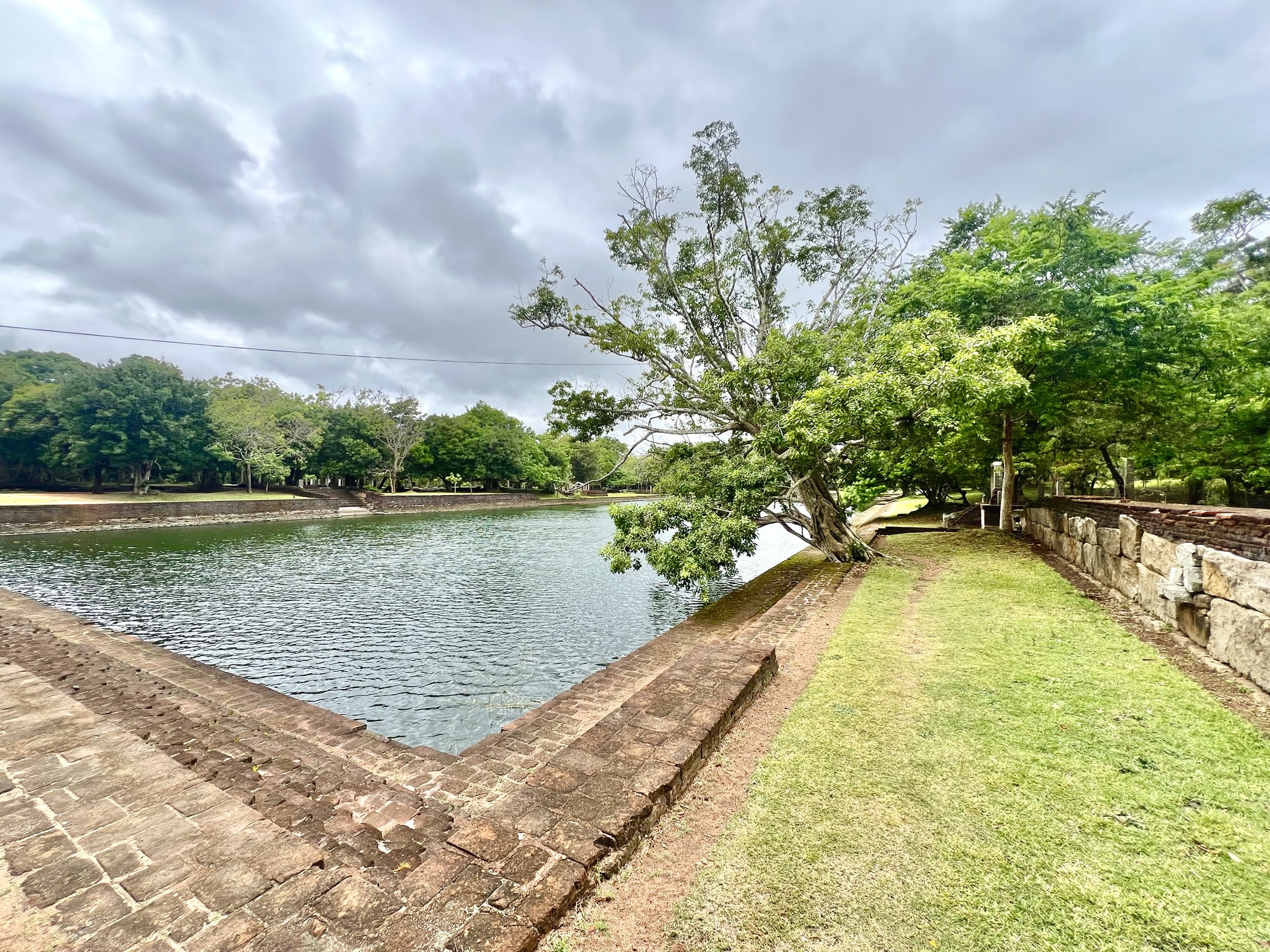
Fifteen centuries after its founding, this amazing city would be invaded, plundered, and rendered inhospitable by the Cholas of Tamilakam.
I was surprised at how calm and resolute I was in my wish to return to this land. To visit Anuradhapura, Sigiriya, Dambulla, and Polonnaruwa, with nothing but a bag and an open heart. By July of the coming year, I shall head back. Life is too short to be hurried with pretentious travel.
This is history. And I am convinced it nourishes me.




 The Reluctant Book Worm
Leave a comment