The decline of Indian architecture over recent centuries demands scrutiny.
Bangalore, for instance, is plagued by uninspired, poorly executed buildings crammed into chaotic urban landscapes. Even well-funded government projects in prime locations often result in contractor-driven monstrosities. The recently opened Terminal 2 at Bengaluru’s Kempegowda International Airport shows glimmers of ambition with its vaulted ceilings, bamboo-themed interiors, and sunlit glass roofs. Yet, these pockets of brilliance feel curtailed, as if an official’s impatience—“Just finish the damn thing”—stifled the architect’s vision.
A well-designed building marries refined aesthetics with functionality, using materials that age gracefully and reflect character over time. Too often, Indian architecture prioritizes superficial facades. A study table may dazzle from the front, but inferior materials on its sides and back betray a desire to cut costs, cheapening the entire creation and revealing a shallow intent to impress from one angle.
This mediocrity extends beyond buildings to public infrastructure. Gigantic statues like those of Sardar Patel and Kempegowda are lazy, uninspiring, and poorly executed. Railway stations, roads, parks, bus stands, and “lake beautification projects” are concrete eyesores that crumble under use and neglect. A recent viral video of a Polish tourist retching near the Taj Mahal, surrounded by heaps of garbage, underscores this grim reality. These spaces fail to inspire and decay under the weight of apathy from both builders and users.

In my 40 years, I’ve rarely seen an urban project executed with taste or care. As a nation, we languish at the bottom of civic sense, public works, and urban planning. Yet, visiting the Brihadeeswara Temple in Thanjavur reveals a stark contrast. Indian temple architecture, centuries ago, was breathtakingly imaginative and enduring. Carved from granite, these structures—some over a thousand years old—boast sophisticated imagery, sublime art, and remarkable durability.

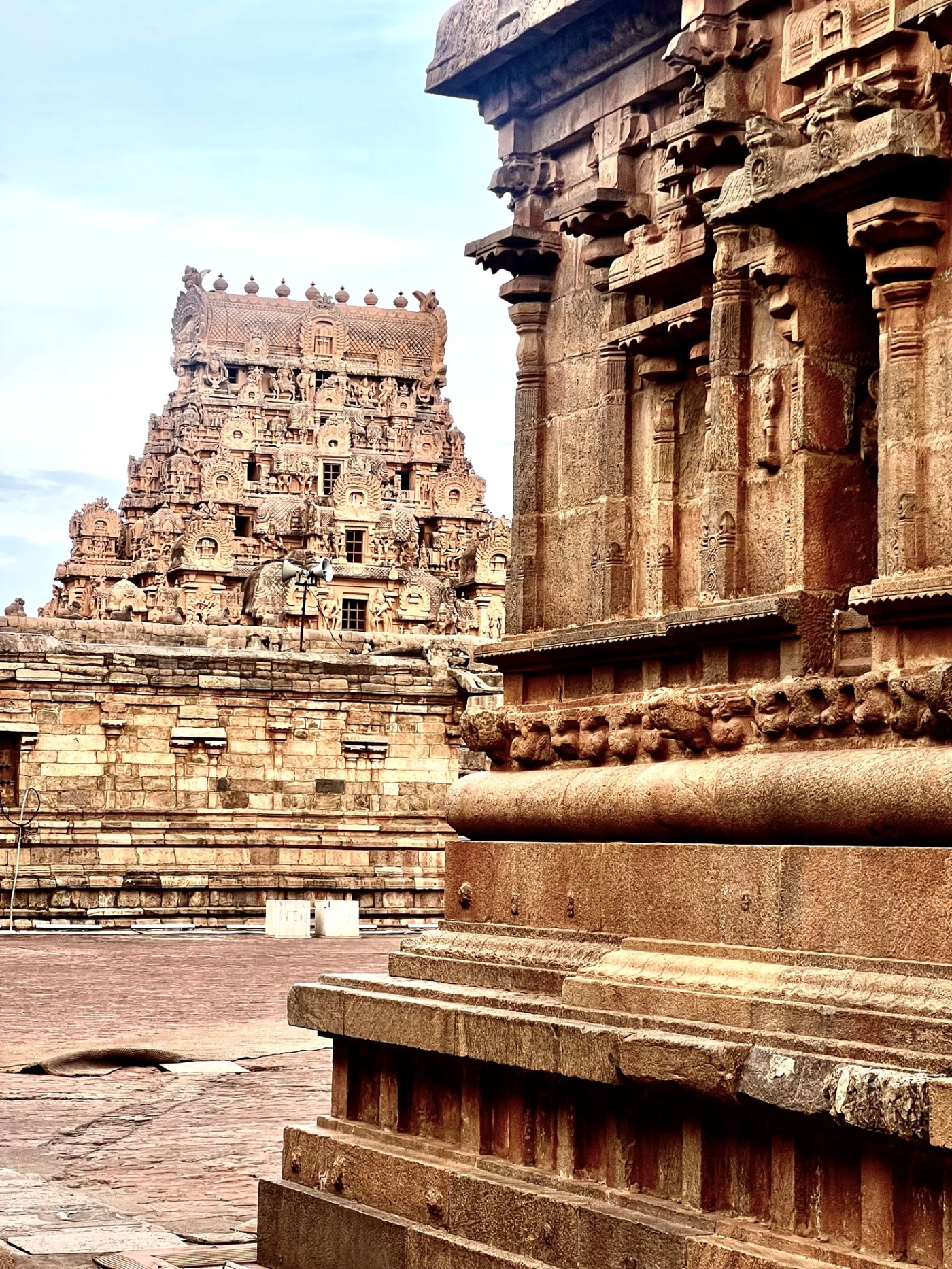
At the heart of the Brihadisvara Temple lies a masterfully planned design that reflects a deep understanding of scale, proportion, and spatial hierarchy. The temple’s axial layout is meticulously organized, leading devotees and visitors through a transformative journey toward the sanctum sanctorum. The spatial progression—from the massive entrance gopuram to the open courtyard and, finally, the inner sanctum—embodies the spiritual ascent from the earthly to the divine.
Standing at over 200 feet, the towering vimana dominates the landscape and asserts the temple’s monumental presence. Its proportions are harmonious, adhering to mathematical precision and the golden ratio, ensuring a visual balance between its towering height and expansive base. This symmetry underscores the Chola architects’ commitment to creating spaces that inspire awe and reverence.
The temple’s circulation patterns are equally deliberate. The axial alignment guides movement, encouraging ritualistic practices and creating an immersive spatial experience. This meticulous planning is a reminder of how architecture can choreograph human interaction with space, enriching both the physical and spiritual journey.


Yet, even this architectural marvel suffers modern neglect. On my visit, garish lights and blaring loudspeakers playing low-quality devotional songs marred the experience. Plastic bottles and bags littered the premises, and visitors ate food in the sacred courtyard, some even climbing ancient carvings. While European occupiers, including the French and British, historically abused the temple, the greatest damage today comes from our own apathy. A simple ban on food, plastic, and noise, rigorously enforced, could preserve its sanctity, but such measures seem beyond us.
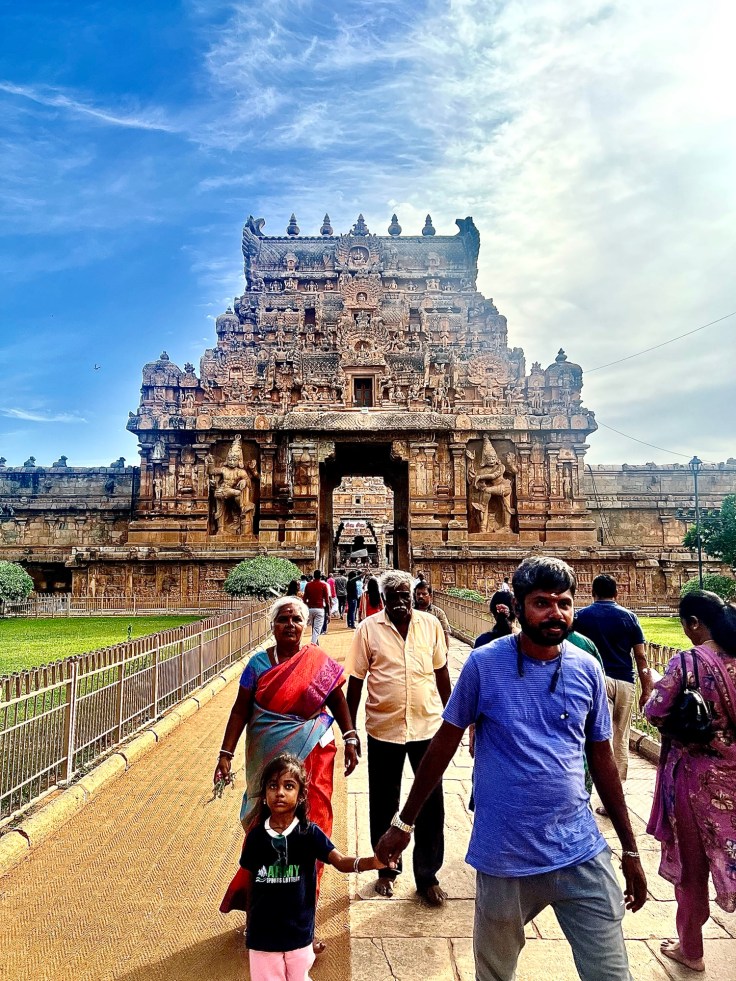
Visitors, including myself, obsessively photographed the temple, desperate to capture its magnificence as proof of our fleeting connection to something grand. But this focus on mementos overshadows the temple’s living legacy. Raja Raja Chola built a timeless masterpiece that has endured centuries of abuse. I’m grateful to have witnessed it. If only we could maintain such beauty, even if we lack the vision to create it anew.
That is how far we have fallen.





 The Reluctant Book Worm