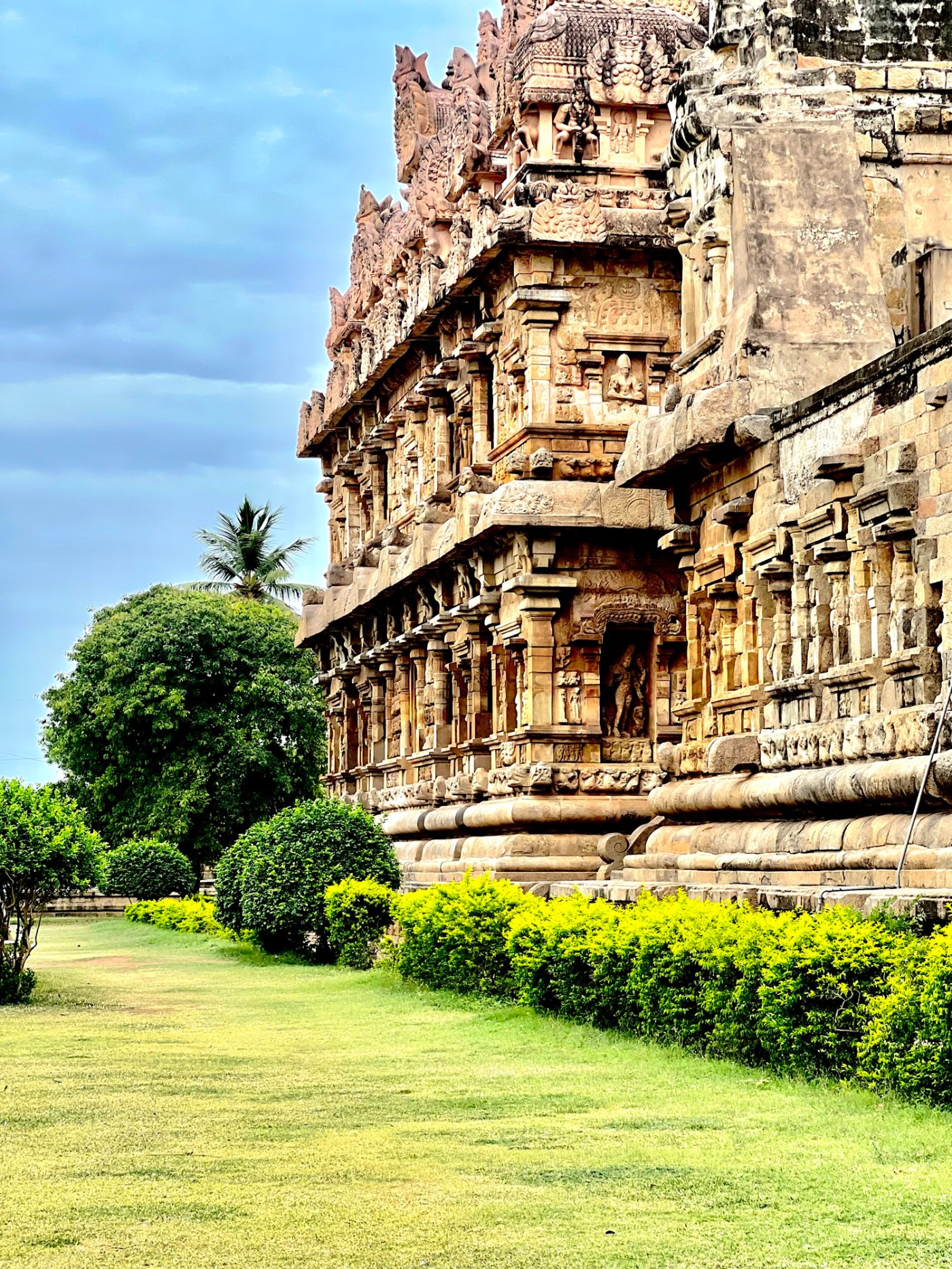
I woke up before dawn, drove through the fertile Kavery rice plains of Tanjavur, and arrived at Gangai Konda Chola Puram at 7 in the morning.
The air was cool and sharp. The banyan tree under which I parked my car was sturdy, rustling, and lush. Diligent gardeners were sweeping the immaculately maintained lawns around the temple complex; being designated a UNESCO World Heritage Site had its perks.
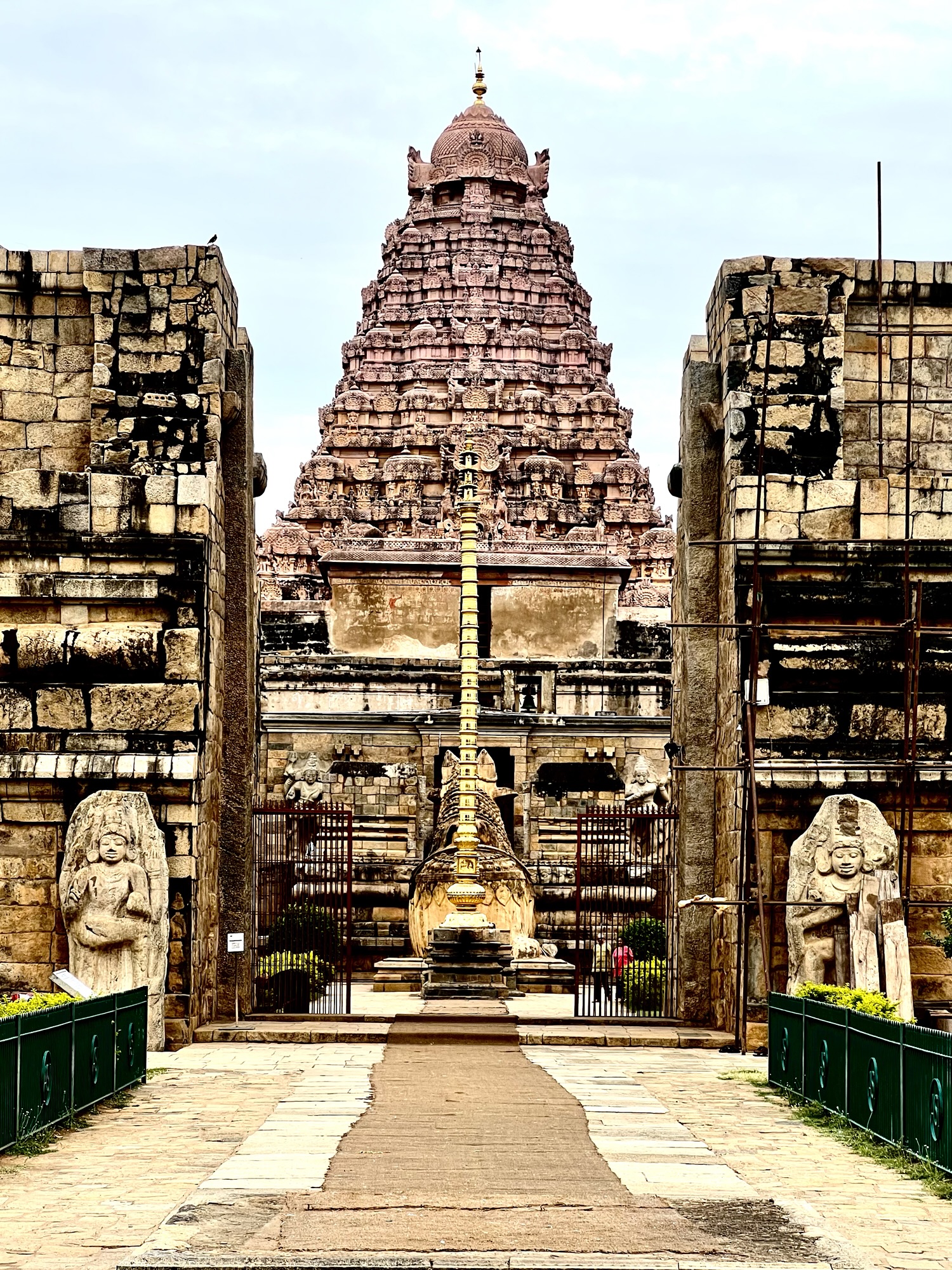
The imposing elevation of Rajarajeshwaram is visible as soon as you enter it.
The temple’s proportions and aesthetics draw you in even as you walk across the lawns. Rajendra Cholan built the temple for his new city, Gangai Konda Chola Puram. Out of deference or practicality, Rajendra’s undertaking is ever-so-slightly smaller than his father’s temple at Tanjavur.
Smaller, maybe, but no less impressive.

Filling big shoes: Rajendra Cholan leaves behind an independently animated and graceful temple, on par with that of his father’s venture at Tanjavur.
The temple towers over anyone who enters, its massive complex blending art, fortification, and imperial ambition. On either side of all gates and doors stand imposing Dwara Palakas – guardians of the entrances. The first impression of the temple’s size and scale is multiplied even more as we near its doors. Each Dwara Palaka – a colossal titan. They stare down contemptuously at approaching mortals with their beatific smile and titanic strength, crushing elephants, pythons, and yalis underfoot. There is punishing ferocity in their scimitar-like, long, curved canines should they detect malice.
These deities are designed to evoke fear and humility in those who dare, deign, or defy passage through these gates. Throughout my trip, in both the Brihadeeshwara temples, the sculptures that terrified me most were those of the Dwara Palakas. The bigger they are, the more insignificant we feel. The smaller our self, the more unsettled we feel. Our ancestors recognized the liberating truth that we are not entirely in control of our destiny in this vast world.
The temple’s scale evokes not just size but the weight of a millennium. Its stones, hewn by hands long returned to dust, bear the craftsmanship of a world we can scarcely fathom. To walk here is to tread through history’s echo, where each step reverberates with the lives of those who built, worshipped, and vanished here.
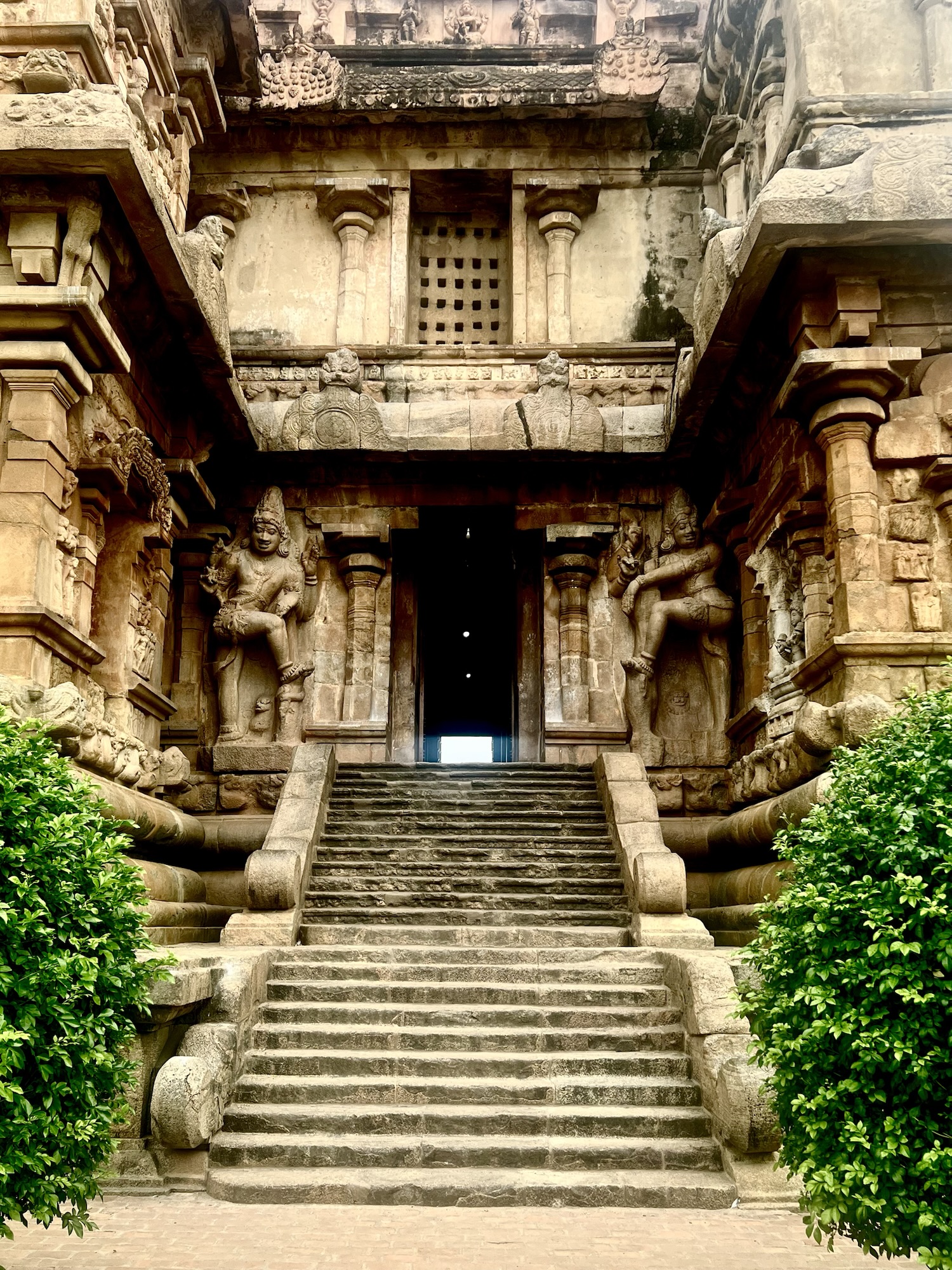
Colossal Dwara Palakas flanking entraces remind mortals of their place in the universe.
Through the entire morning, I walked around the temple numerous times, trying to transport myself into a world that is devoid of the advances and knowledge we have today. A thousand years ago, to enter this complex in complete darkness, with only a tiny orange flicker from a lamp, if that, would have been an act of supreme faith and courage.
The vaulted ceilings disappear into dim bat-ridden recesses, their dizzying heights only to be sensed in the pitch-black shadows. Even in the darkness of the innermost parts of the temple, where sunlight never penetrates, one can feel the strains of haunting history. Why else would modern man’s mind be so tremorous when he stands inside that space, surrounded by darkness and flickering shapes? It could just be me, but whoever built this temple seemed to have deeply respected (and so) harnessed the dark of the shadows as much as the light of the stone. The shadows seem to enhance rather than obscure beauty.
In his famous treatise on lights and shadows, “In Praise of Shadows”, Junichiro Tanizaki says
Were the Noh to be lit by modern floodlamps, like the Kabuki, this sense of beauty would vanish under the harsh glare. And thus the older the structure, the better, for it is an essential condition of the Noh that the stage be left in the darkness in which it has stood since antiquity. A stage whose floor has acquired a natural gloss, whose beams and backdrop glow with a dark light, where the darkness beneath the rafters and eaves hangs above the actors’ heads as if a huge temple bell were suspended over them – such is the proper place for Noh. Its recent ventures into huge auditoriums may have something to recommend them, but in such a setting, the true beauty of the No is all but lost.
A thousand years ago, the temple must have been an ethereal silhouette in the inky silence of night, its stones and shadows interwoven into a mystic entity. In darkness, it must have transcended human understanding, whispering secrets of vast spaces. By day, it stood as a regal emblem of power and delicate artistry.

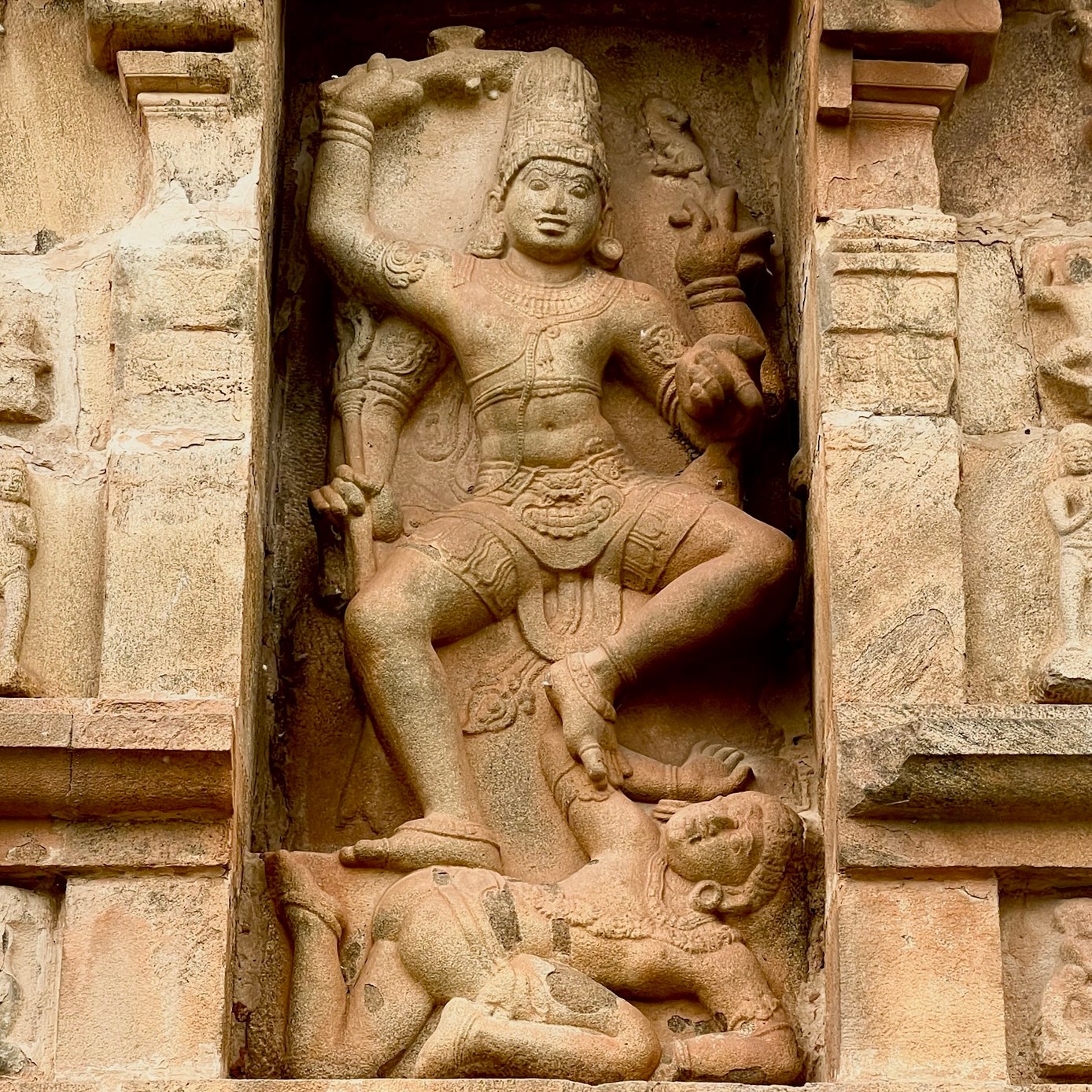
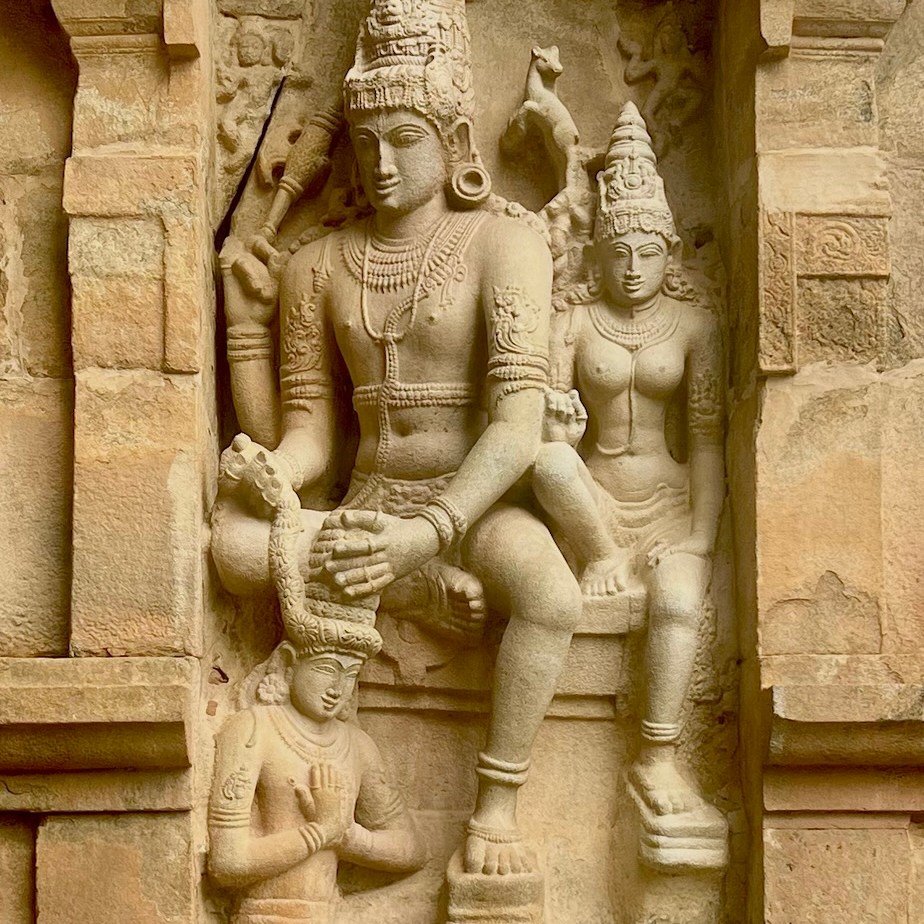
Chola architecture at its finest.
I’d have stayed there the whole day in this meditative mood, but I was driven out by a musician’s virtuosity. A Nadaswaram —a piercing South Indian wind instrument— Vidwan. Now, to encounter a Nadaswaram in real life without earplugs is like stumbling upon a tiger in the wild. You freeze, surrender, and let its raw power wash over you, hoping you emerge transformed, if not unscathed, after the mauling.
The stone columned Mandapam spun and drowned in an ear-splitting blare. The Vidwan had decided the best offering he could give to this transient morning silence was his art.
As I staggered out of the temple, ears ringing and head reeling, I could still picture the maestro’s facial contortions as he blew into that reed instrument from safely behind the business end of the pipe.
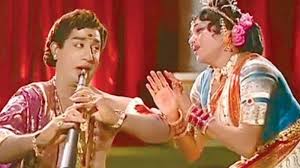
A distraught Padmini beseeches a smug Shivaji for mercy.
Rajendra Cholan’s masterpiece has weathered a thousand years. Gangai Konda Chola Puram, the new city founded by him and that had served as the Chola capital for 250 years, has crumbled to dust.




 The Reluctant Book Worm