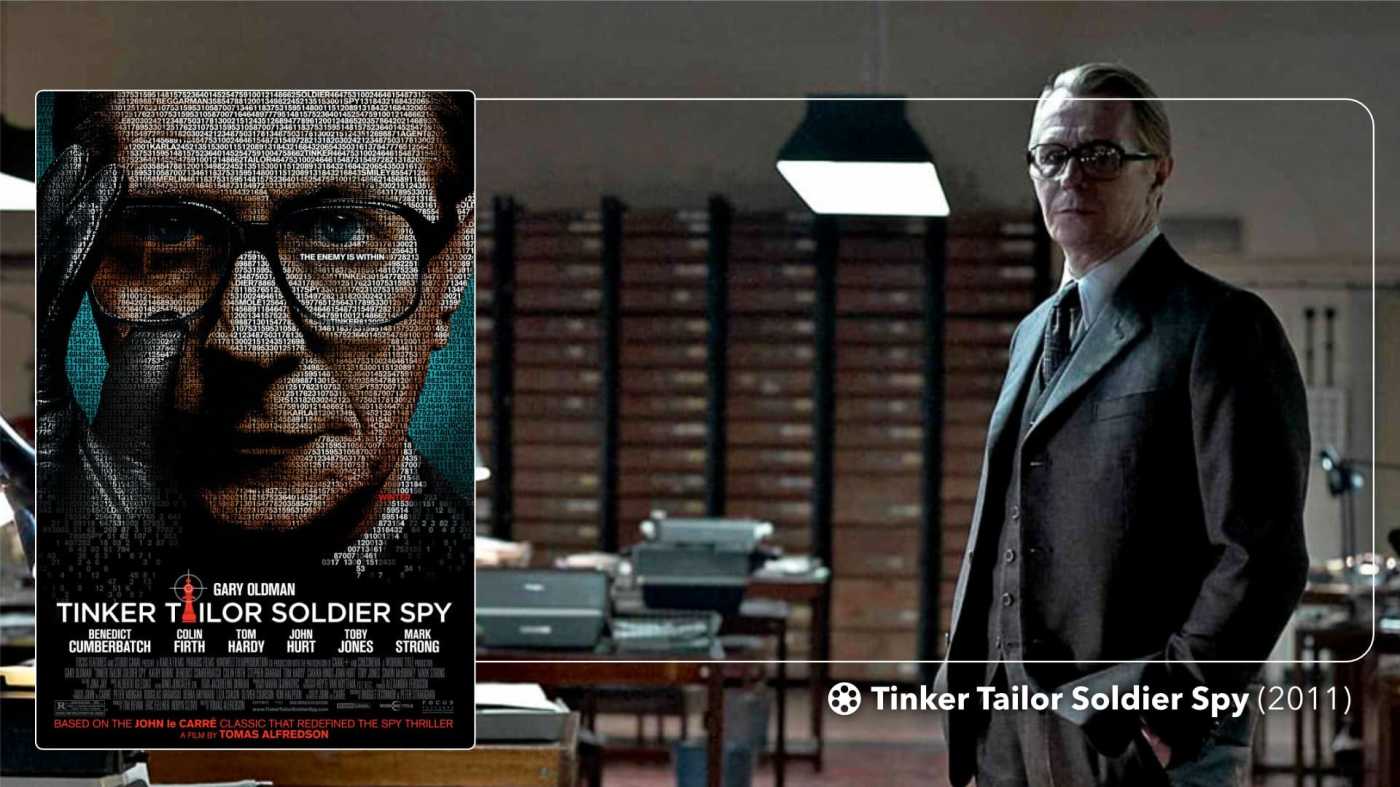
Tinker Tailor Soldier Spy is a masterclass in slow-burn espionage, a film that trades bombastic action for a quiet, cerebral tension that seeps into every frame. Set during the Cold War, it follows George Smiley (Gary Oldman), a retired British intelligence officer tasked with rooting out a Soviet mole within the upper echelons of MI6, known as “the Circus.” The plot unfolds like a chess game—deliberate, intricate, and demanding of your full attention.
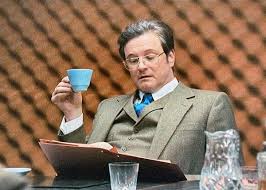
Oldman’s Smiley is a revelation: reserved, almost invisible, yet radiating a steely intellect. He’s the anti-Bond, a man who weaponizes silence and observation rather than gadgets or bravado. The supporting cast—Colin Firth, Tom Hardy, John Hurt, and Benedict Cumberbatch, among others—brings depth to a roster of flawed, paranoid spies, each wrestling with loyalty and betrayal in their own way. Firth’s charm masks a slippery ambiguity, while Hardy’s raw vulnerability as field agent Ricki Tarr injects a rare pulse of emotion into the film’s otherwise muted tone.

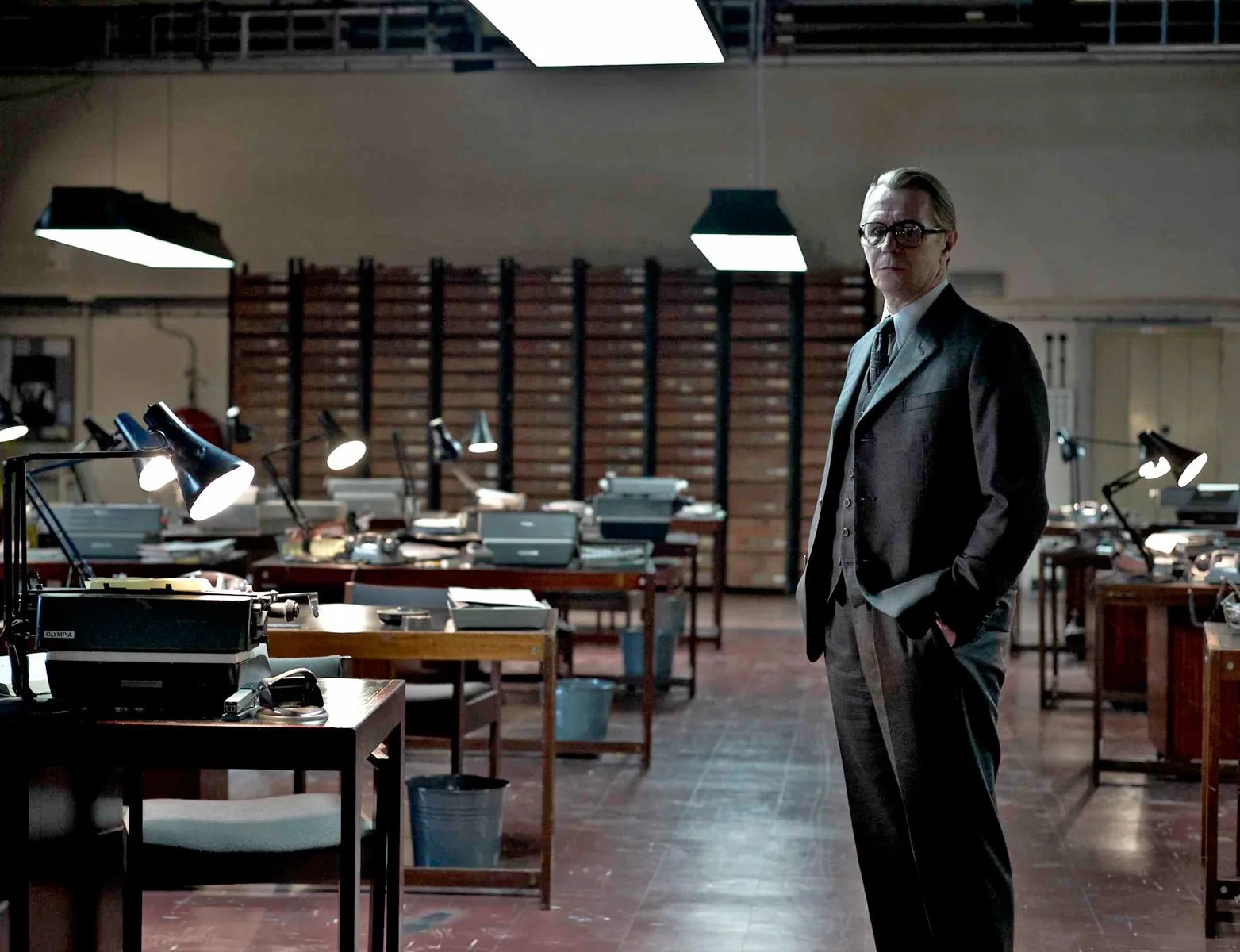


Visually, Alfredson crafts a world of drab grays and browns, a suffocating 1970s London where cigarette smoke hangs heavy and every room feels like a trap. The cinematography by Hoyte van Hoytema is meticulous, with wide shots that emphasize isolation and close-ups that hint at unspoken secrets. The score by Alberto Iglesias complements this mood perfectly, its melancholic strings underscoring the weight of distrust.
The screenplay, adapted by Bridget O’Connor and Peter Straughan, condenses le Carré’s dense novel into a tight two hours without losing its essence. That said, the film’s labyrinthine plot—full of codenames, flashbacks, and subtle clues—won’t hold your hand. It’s a puzzle that rewards patience and repeat viewings, though some may find its deliberate pace and lack of clear exposition frustrating.
Gary Oldman’s Masterful Performance
Gary Oldman’s portrayal of George Smiley is the quiet heartbeat of this slow-burning espionage masterpiece. Oldman takes this understated, bespectacled bureaucrat and transforms him into a figure of mesmerizing depth—a man who wields silence like a blade and observation like a superpower.
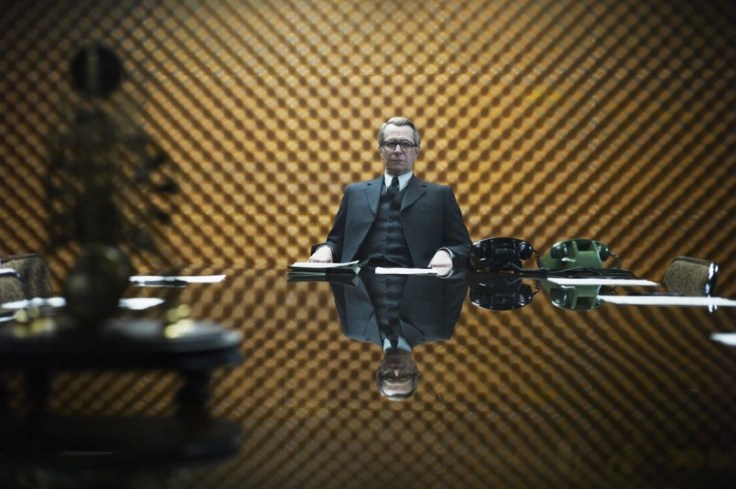
Oldman’s Smiley is the antithesis of the flashy spy archetype. There’s no swagger, no quips—just a weary, methodical presence that commands attention through restraint. His face, often framed behind thick glasses, is a canvas of subtle tics and flickers: a tightened jaw, a distant gaze, a faint curl of the lip. These micro-expressions speak volumes, hinting at the storm of intellect and suppressed emotion beneath his placid exterior. When he finally speaks—his voice low, measured, almost hypnotic—it’s as if every word has been weighed for maximum impact. Oldman makes Smiley’s stillness feel dangerous, a coiled spring in a world of chaos.
The film’s Cold War setting, with its muted palette and paranoid atmosphere, amplifies Oldman’s performance. He’s a ghost moving through smoky rooms and shadowy corridors, unraveling a conspiracy with the patience of a predator. One standout scene has him recounting a past encounter with his Soviet nemesis, Karla. Oldman delivers the monologue with a mix of detachment and buried anguish, peeling back Smiley’s layers to reveal a man haunted by his own compromises. It’s a moment of raw vulnerability, rare in a film this restrained, and Oldman nails it without ever raising his voice.
What’s remarkable is how Oldman anchors the ensemble—Colin Firth, Tom Hardy, Benedict Cumberbatch—without overshadowing them. His Smiley is the eye of the storm, letting others’ flashier turns orbit around his quiet gravity. Critics often praise his versatility (think “Sid and Nancy” or “Dracula”), but here, he proves he can captivate by doing less. It’s a performance of precision, not pyrotechnics, and it earned him a well-deserved Oscar nomination.
Tinker Tailor Soldier Spy demands focus, and Oldman rewards that investment. His Smiley is a study in control—a spy who doesn’t need to run or shoot to dominate. For fans of acting as an art form, his work here is reason enough to watch.
This isn’t a movie for everyone. It’s not a thriller that races; it’s one that simmers. But for those willing to lean into its quiet intensity, it’s a gripping portrait of a world where truth is a luxury and betrayal is just another day at the office. A spy story less about heroics and more about the cost of suspicion, it lingers long after the credits roll.
Having watched it once, I’ll definitely be returning to this atmospheric masterpiece to savour the nuances.




 The Reluctant Book Worm
Leave a comment