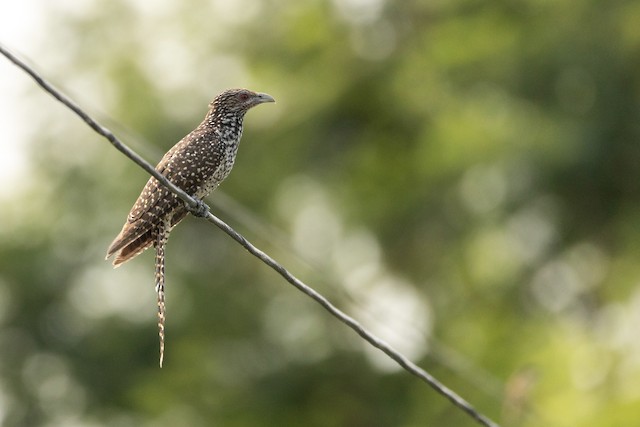
The Asian Koel is the kind of bird that wins the popular vote from a non-discerning public, like the homecoming King and Queen whom everybody cheers for on stage but nobody likes once they get off the stage.
Asian Koels are brood parasites.
They swoop down into unsuspecting host birds’ nests, lay an egg among the bird’s eggs, and fly off, leaving the unsuspecting new mother to foster and raise the intruder chick.
This is an irredeemable character flaw of the Asian Koel.
However, the Asian Koel does not lack publicists in Asia. Poets wax on about how musically the Koel sings. Songs abound of how musicians engage in orchestral jostling with this lyrical bird.
If one does not know better, the Asian Koels might get away with one of the most significant public relations spin-doctoring in avian history.
Extraordinarily secretive, Asian Koels are hard to spot unless they decide to reveal themselves to humans. Humans don’t look for Koels despite their distinctive call, or maybe precisely because of their familiar call.
“That’s the Koel,” we say, dismissing it, not bothering to locate the bird. The more energetic of us sometimes mimic the sound. The more you echo back the Koel’s call, the more insistent the invisible Koel’s call becomes – or at least that’s what adults tell the kids. Their drawn-out eponymous cries are heard all across India, extending into the Sundas.

The male has a glossy black or a dark blue coat of feathers, crimson eyes, and nondescript beak and legs. The female has more distinctive stripes and spots all over it. Scientific literature insists that the bird’s bill is a pale green. These birds dart in and out of thick trees, and though they are a common species in Bangalore, I rarely spot them in the open. A pair visits my home in Bangalore for a quick dip and drink in the water bowl, but they are infrequent visitors. Always a rarity whenever they show up.
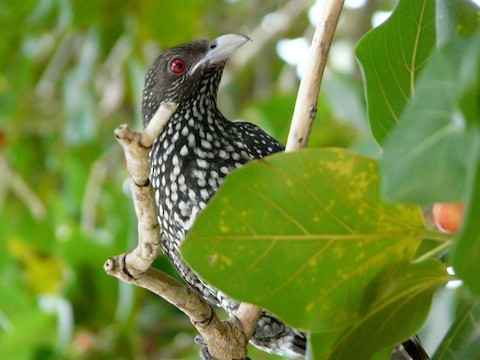


For the longest time, I had nursed a mild grudge towards the Greater Coucal, a rather noble strutter from the Cuculidae family, because of my ignorance of birds. I thought all birds of the Cuculidae family were brood parasites. You know, birds of the same feather… and all that.
Turns out that the Greater Coucals are just harmless bush jumpers. The culprit was the Asian Koel – that bird featured in all subcontinental poetry.
Adults are primarily frugivorous. Primarily, that is, other than when they occasionally gobble up the extra egg during their extra-nesting maneuvers.
As I review the list of birds near my home, I am starting to realize there is a lot of drama amongst the birds. The Drongo can hold its own (and sometimes instigate wanton violence) against larger and predatory birds. The Kingfishers are no pushovers either. White-Cheeked Barbets know how to mind their own business. The Greater Coucals seem to exist without worrying about the bad name they get from association with the Asian Koels. The sunbirds seem to somehow survive amongst all these neighbourhood toughs.
With some heavy hitters like the crows and the kites lined up for analysis, I feel I have to confront my own comfortable narratives I’ve built up for these birds. Who knows, maybe even the Asian Koel can have redemption.




 The Reluctant Book Worm