
I became aware of the existence of Indian Grey Hornbills (Ocyceros birostris) very recently.
Until a few years back, whenever I thought of Hornbills, I thought of the Malabar Great Hornbill (Buceros bicornis). These more recognizable cousins of the Indian Grey Hornbills are strikingly loud in plumage and vocalization. They have majestic casques and characteristically dark yellow bands of feathers set against a black coat; a proper head-turner, so much so that the Malabar Great Hornbills have beaten other formidable candidates in avian-rich states like Kerala and Arunachal Pradesh to become the states’ official birds.


Great Indian Hornbill
Hornbills, in my foggy understanding, were therefore exotic, to be viewed either in zoos, dense forests, or Instagram feeds of amateur photographers with obscenely long lenses.
This worldview changed one day when I sat in the Hindustan Aeronautical Limited Football stadium stands, watching Mira dribbling the football. Every weekend in early 2024, we went there (before the venue shifted to a smaller place near Yemlur) for a few hours of football practice.
I was lost in thought, watching Mira play. She was competent and focused, but I’ve always thought that there was a thread of tension running through her as she played. She had discipline but no passion for the game, and eventually, this suspicion bore out when, at the end of the year, she said, “Appa, I don’t really enjoy football.”
This whole football field was surrounded by old, majestic raintrees. Outside this tiny ring of greenery, the choke and dust of Bangalore resumed.
Imagine my surprise when I noticed a bird flying across the darkening sky with a flap-flap-glide rhythm. Two flaps of the wings and a dipping glide followed by two flaps that lifted the bird up again before the whole pattern repeated. It took me a while before I realized this could be a hornbill.
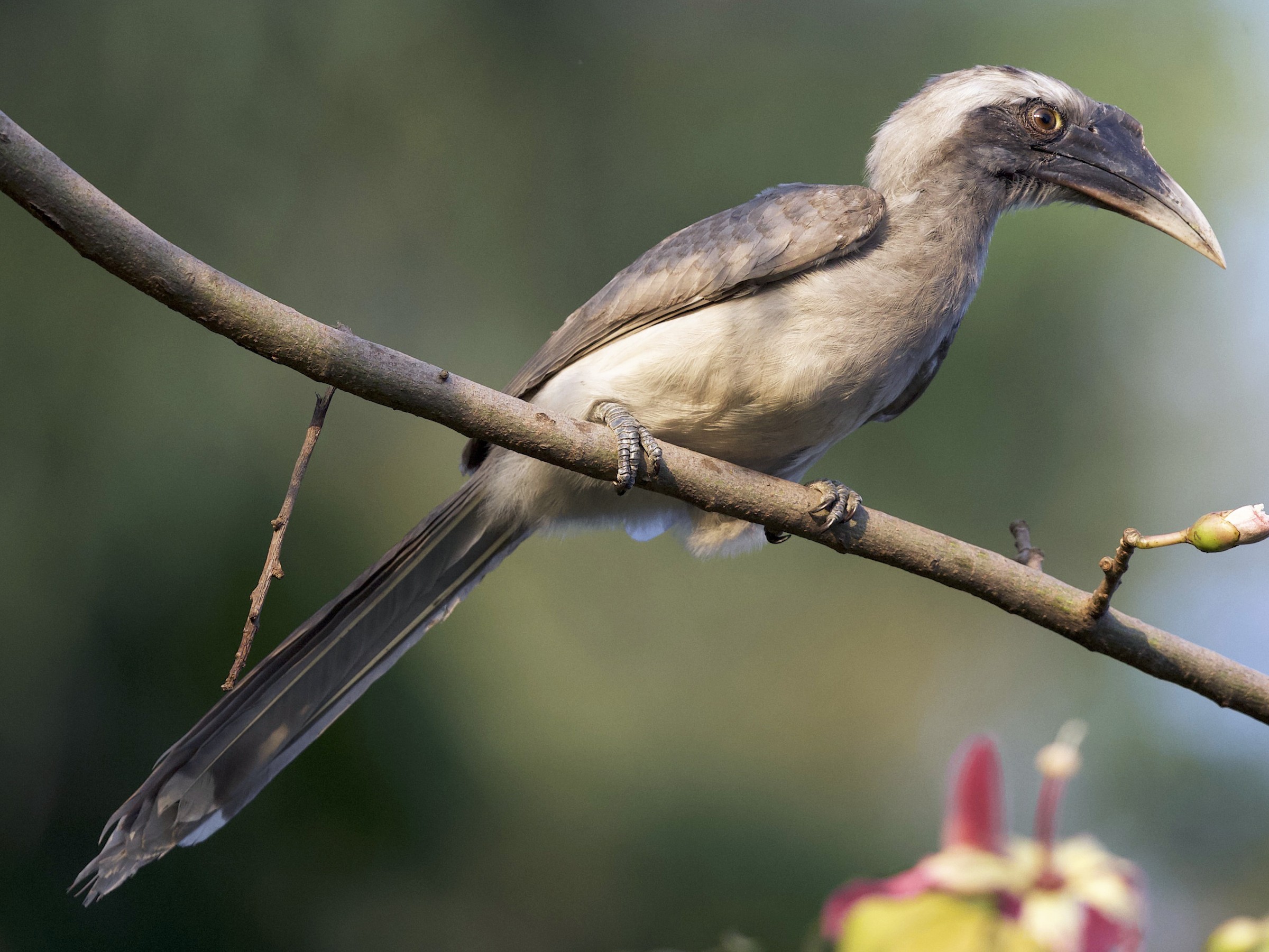
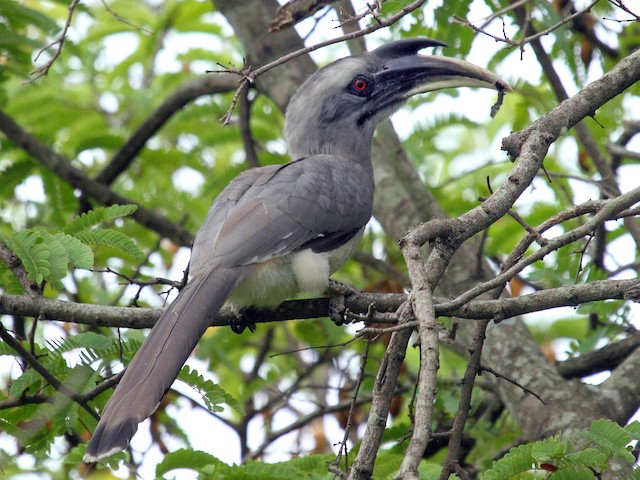

But where were the tell-tale signs? Where was the casque? The cartoonishly yellow beak? And what was a rare bird found in dense rainforests doing in grimy Bangalore?
There was collective cheering as the football game continued, and I turned my attention thoughtfully back to the game.
Later, I read that the Indian grey hornbill was a hardy survivor. Unlike the garish rose-ringed parakeet or the clownish white-cheeked barbet, who streak around town in candy colors, the Indian grey hornbill is more subtle. They are an unassuming grey. They have the curved bill that their more famous cousins have and even share the eccentric monogamous and nesting behaviors of the larger of their species. The Indian grey hornbills are, however, content with a shabby cloak of avian invisibility.
The Indian grey hornbills are ubiquitous in India, and once you start sensitizing your gaze to these drab birds, they appear in the most unusual places. I’ve seen a pair emerge from an old tamarind tree at a busy intersection in Mysore town. I sighted one bobbing and flying around a village cowshed, likely enjoying a surf-and-turf of critters that abound in the haystack while the entire village was gathered nearby for a noisy festival.
In Malayalam, the Indian great hornbills are called Naattuvezhambal (the Great Indian hornbills are called Malamuzhangi Vezhambal, probably alluding to their loud resonant calls), and in Tamil, Sambal Iruvachi. Somehow, I seemed to have gone years without recognizing or taking cognizance of references in either language to these ubiquitous birds.
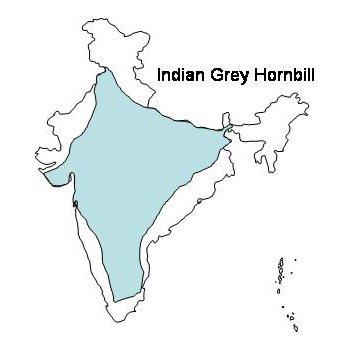
However, now that I know of their existence, they pop up everywhere. Last week, I was lounging around in the outskirts of Mysore and Hunsur when I saw a pair of Indian grey hornbills descend screechily onto a nearby drumstick tree. I spent a good ten to fifteen minutes watching them as they noisily established themselves in the area, probably scoping out holes in nearby trees to nest.
We always notice colorful characters, but these birds seem to do just fine living away from the limelight. While primarily arboreal, their subdued attire allows them to dive down to the ground and roll around in the mud to “dustbathe”.
There is definitely a lesson somewhere here about living life in the grey zone.
The pair’s shrieks crescendoed, and I shook myself awake again, but the pair had blended into the grey skies.




 The Reluctant Book Worm
Leave a comment