
Last year, we went on a vacation to Coorg. It was one of my most memorable trips. We stayed in Siddapur, in the middle of coffee country, undisturbed and very tastefully done.
Every morning, I would wake up very early to soak in the peace and quiet of the surrounding jungles. The whole scenery was magical, with a nearby lake shimmering beneath swirling mists, vague silhouettes of abnormally tall trees half-formed within the fog and a chorus of bird calls echoing back and forth.
Each morning I was there, I spotted a white-throated Kingfisher. Its cobalt blue back bobbed jauntily as it perched on a jutting branch, waiting for an unlucky prey.
White-throated kingfishers have been a common sight since my childhood. Long before these colorful birds were appropriated by Indian beer barons and Caribbean cricket teams, Kingfishers had been my friends, providing comforting pastimes during lazy afternoons.
White-throated kingfishers have supremely blue tints, warm chestnut wings, thick red beaks, and short feet.

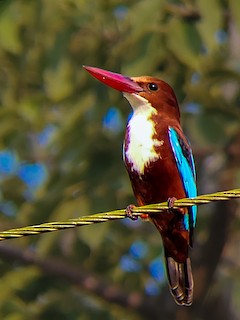
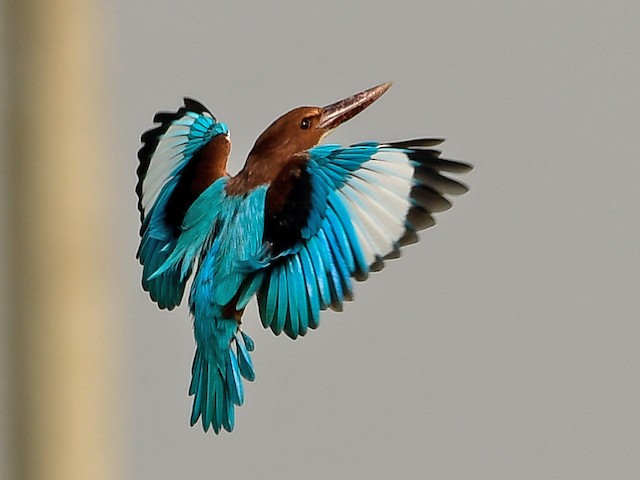
I still think of all the trees and birds we encountered in Coorg — some really magnificent specimens, including vernal hanging parrots, Malabar hornbills, and a host of fidgety sunbirds — but they are all tinged with warm Kingfisher blue.
Back here in Bangalore, mostly on weekends, I walk around Kasavanahalli Lake, a dilapidated lake near home. A decent variety of birds frequent the brackish waters. If I’m early enough, I spot at least one White-Throated Kingfisher patiently perched on a branch. What brilliant blue. What red bills.
Meenkothi, in both Tamil and Malayalam, are too conspicuous not to be named and identified locally. These birds burrow in the ground, preferring ground-level domiciles to nests in the trees.
I’ve always found this surprising as it breaks away from stereotypes: flashy bluebirds that nest in the ground. These “King of Good Times” birds are not endemic or even visitors to the Caribbean islands. If we stretch a bit, their scientific name, Halcyon smyrnensis, a distinctly Greek name, is funny because there have always been questions about whether the Greeks knew of the color blue, the hallmark of the bird.

Purely because I encounter these birds in the mornings, they are part of my “big” life decisions that I mull over alone. These birds were there when I decided to change jobs, get married, or reprioritize what life and success mean to me at different phases.
I’ve also come across their cousins, the Collared Kingfisher. Recently, on a trip to Thailand, I stayed in my old stomping grounds in Khao Lak, a sleepy village devasted by the 2004 Tsunami. There, among the casuarinas, on a coconut tree, sitting along with me for a long time, was the Collared Kingfisher.
This one specimen, though, seemed in deeper thought than me.





 The Reluctant Book Worm