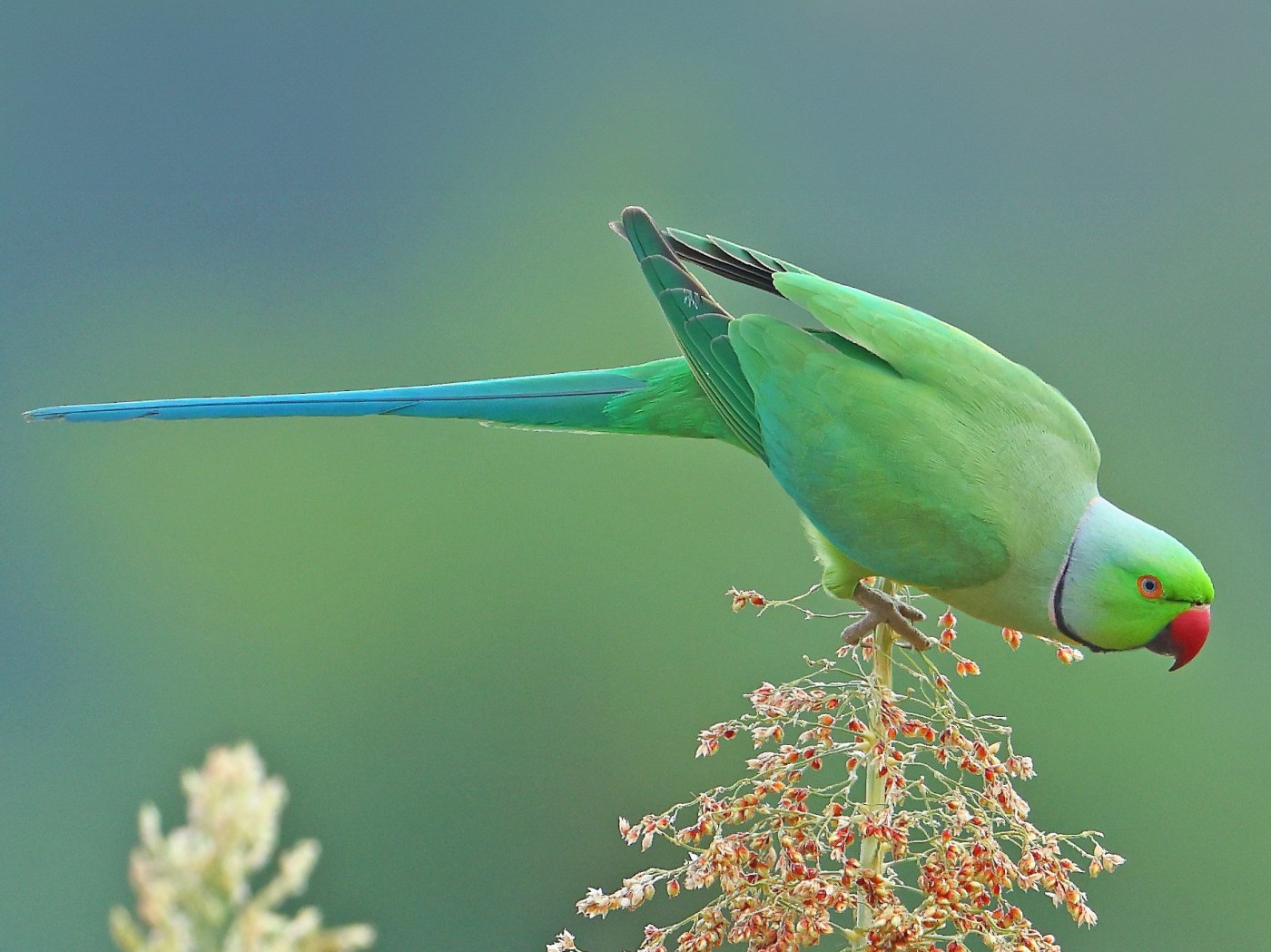
Rose-ringed parakeets do not know how to make a subtle entrance.
On evenings, when the dusty Bangalore sky finally ruptures and oozes cadmium red, shrill squawks rend the air. Crimson-nosed emerald torpedoes on wings scud into view, banking and weaving through trees and buildings at ridiculous speeds and with disdainful dexterity. As they come closer, you see a flock of rose-ringed parakeets winging their way back home after a full day of hard labour.
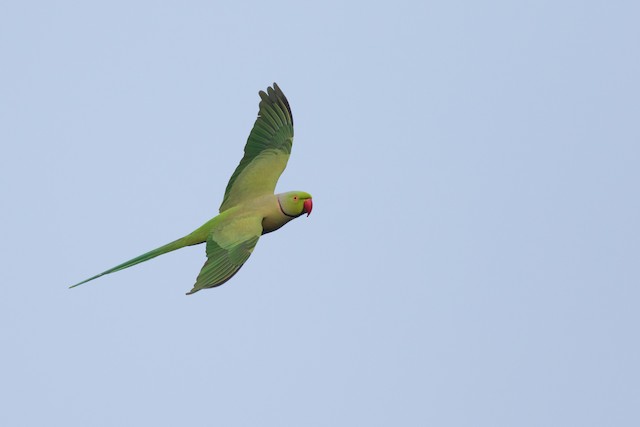
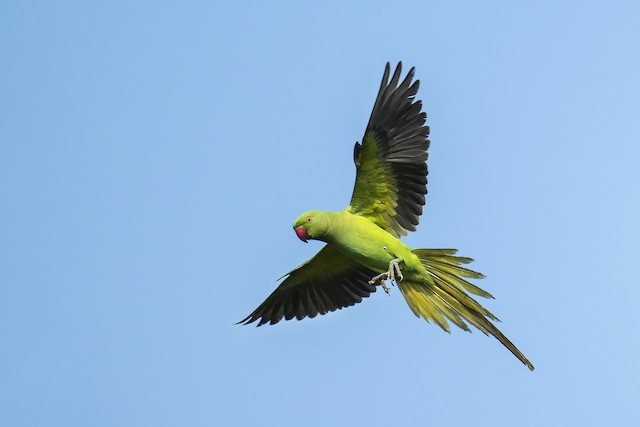
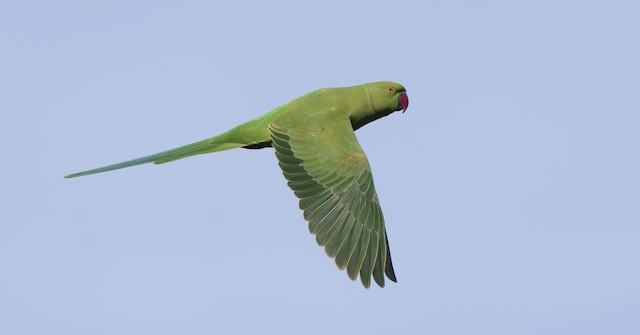
Wagnerian entrances suit the pandemonium, which is the daily liminal homecoming of a parakeet flock.
On weekends, near Mira’s football field, as practice ends, flocks of parakeets return, circling their nests (holes in coconut tree trunks). It is a great location. Nearby, Surinam cherry trees bear a lot of tarty fruits. It is a shame that these hardy trees are being overwhelmed by construction debris, dust, and plain abuse within the city.
Under these harsh conditions, the Rose-ringed parakeets have established a stable lifestyle (IUCN: Least Concern).
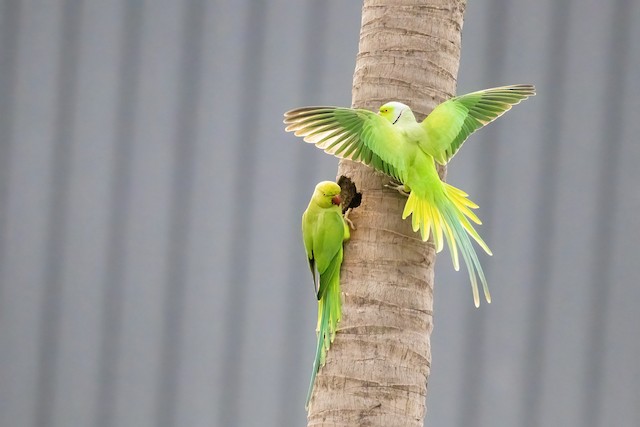
They are vibrantly green with betel red-stained curved strong beaks. They have the eponymous rose ring at their necks. Their body tapers into a long blue tail. Their claws are remarkably adroit and nimble. They hold food in their claws and enjoy their meals.
These delicate-looking parakeets have somehow broken the cycle of species destruction despite human avarice to destroy and own. When humans destroy forests, they roost and nest in dead stumps of forests. As humans trap and sell these colorful, social, raucous birds in the rampant pet circuit, escaped specimens establish feral populations returning to wreak destruction on fruit trees and harvests. Abandoned (I’d like to think they somehow engineered their own prison breaks), Rose-ringed parakeets have now established self-sustaining feral populations around the temperate world.
Rose-ringed parakeets are quintessentially Indian. In the southern states of Kerala and Tamil Nadu, they are the lazy poets’ muse. Pachaikkili leaves no room for doubt as to what it refers to. Mothira Thatha in Malayalam refers to the ring. Its scientific name, Psittacula krameri, comes from the Latin word Psittacus, meaning parrot, and Krameri is an homage to the German naturalist Wilhelm Heinrich Kramer.
Rose-ringed parakeets are, in a way, the Indian subcontinent’s sweet revenge on the world. Indian kings, nawabs, and chieftains were enticed with colorful baubles by the European states into debilitating colonial economic and, eventually, actual slavery. Rose-ringed parakeets are imported willingly into Europe by those wanting to own an exotic pet. Once the pets outlived and outscreeched their novelty, they adapted to the local landscape, displacing other competing species.
Take, for example, the saga of the Rose-ringed parakeet vs the greater noctules.
“The greater noctule bat is a rare carnivorous bat found in Europe, West Asia, and North Africa. It is the largest and least studied bat in Europe, with a wingspan of up to 46 centimeters, and is one of the few bat species that feed on passerine birds.” In other words, noctules are the bad mofos of the night that are secretive, snarling, and can pluck out flying birds at night. And they hang out in holes in trunks of trees, which, incidentally, is where Parakeets like to roost.

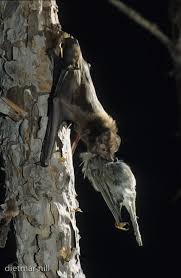
Enter the Rose-ringed parakeets, new to the lands and looking for homes. These invasive Parakeets are the proverbial new kids on the hood block: soft-looking newbies who get jumped by the local toughs.
Scientific studies report the opposite.
“Rose-ringed parakeets (Psittacula krameri), an invasive species, compete for homes in tree hollows and will attack and kill adult noctules before colonizing their habitat. There has been an 81% decrease in trees inhabited by the bats since researchers first began keeping track.”
The green berets have struck.





 The Reluctant Book Worm