
I was very worried about the Black Drongo that I saw perched on the telephone line two nights in a row in the same place.
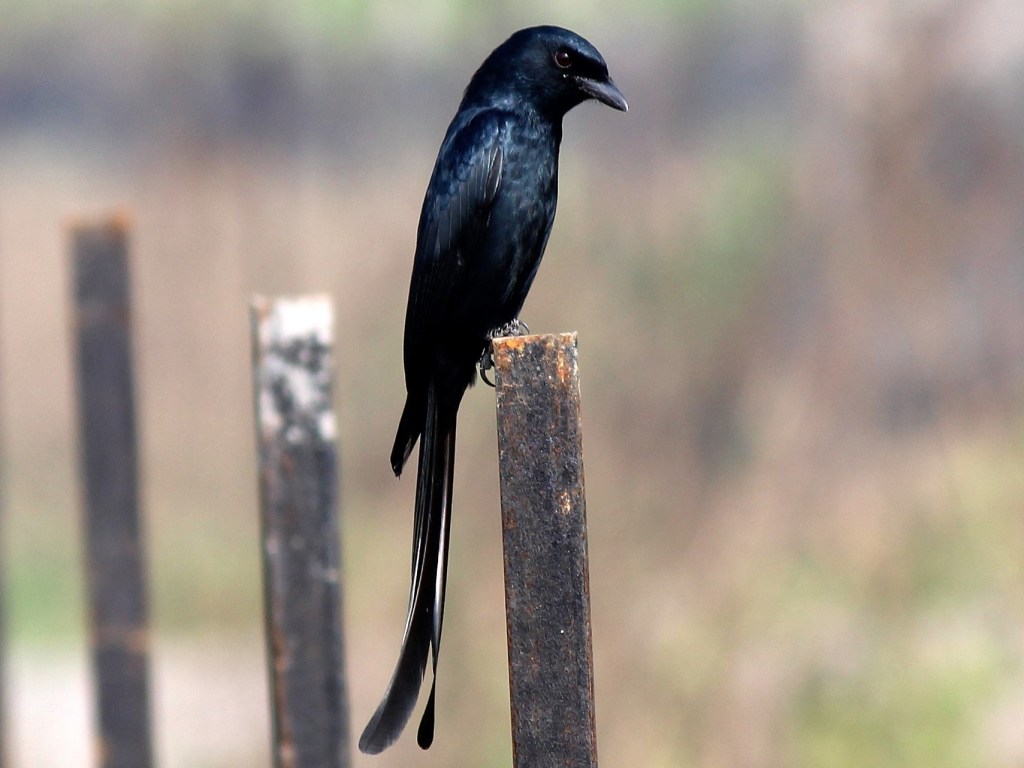
The Black Drongo was one of those rare common bird that I could identify from when I was a kid. Its Tamil name, Rettai Vaal Kuruvi, also helps aid recollection easily.
Drongos range throughout the entire country and is distributed throughout southeast Asia. Their tall upright stance, dainty size, and long forked tail make a distinctive silhouette as they perch on power lines and telephone poles. If Indian electric companies ever need a mascot, they need not look beyond this passerine.
The reason I was worried is that in my mind, I have two broad varieties of birds.
The raptors – those high-flying birds with curved beaks and talons. There are many around where I live. With two lakes in very close proximity, circling Brahminy Kites are a common sight when I go for walks. Then there are the owls. I’ve never seen them, but I hear their hoots at night. These owls are nocturnal killers of some repute.
Then there is the other chirpy-fluffy-ping-ponging-tail-wagging- group of tweety birds. Sparrows, tits, white eyes, sunbirds, bee-eaters, and drongos.
What would happen if the raptors laid their talons on these sweet little unsuspecting birds. Carnage!
This was my worry when I saw the Drongo nodding off peacefully on the powerline at night during my walks. Sure, the mango leaves under which the bird was perched offered it a degree of protection, but I’ve heard that these owls have a sense of hearing so keen that they can hear a field mouse’s heartbeat even if the mouse was 3 feet underground. These small birds stand no chance against such villains.
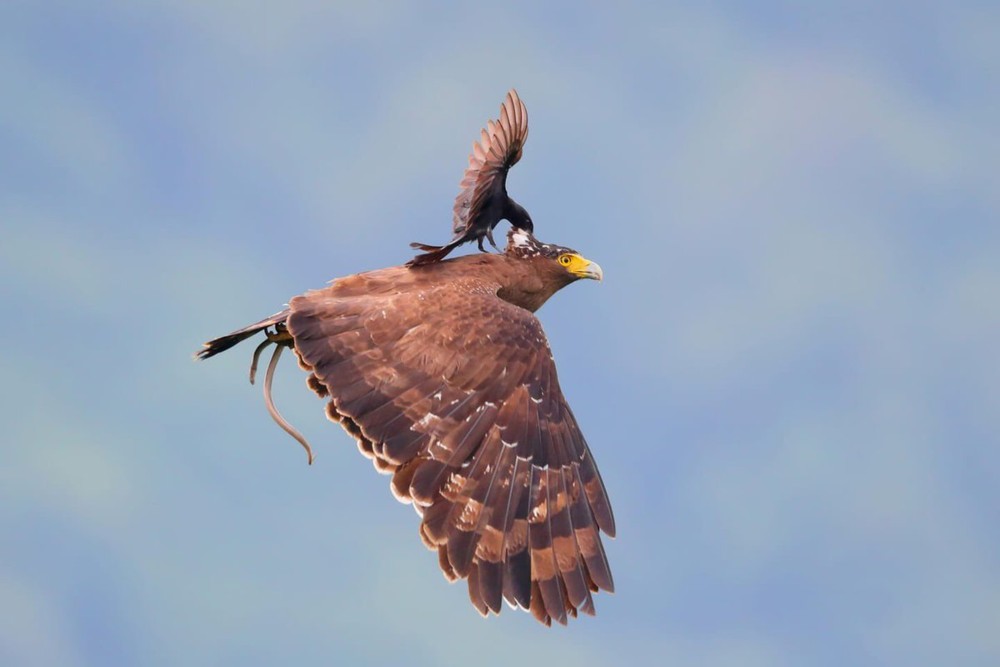
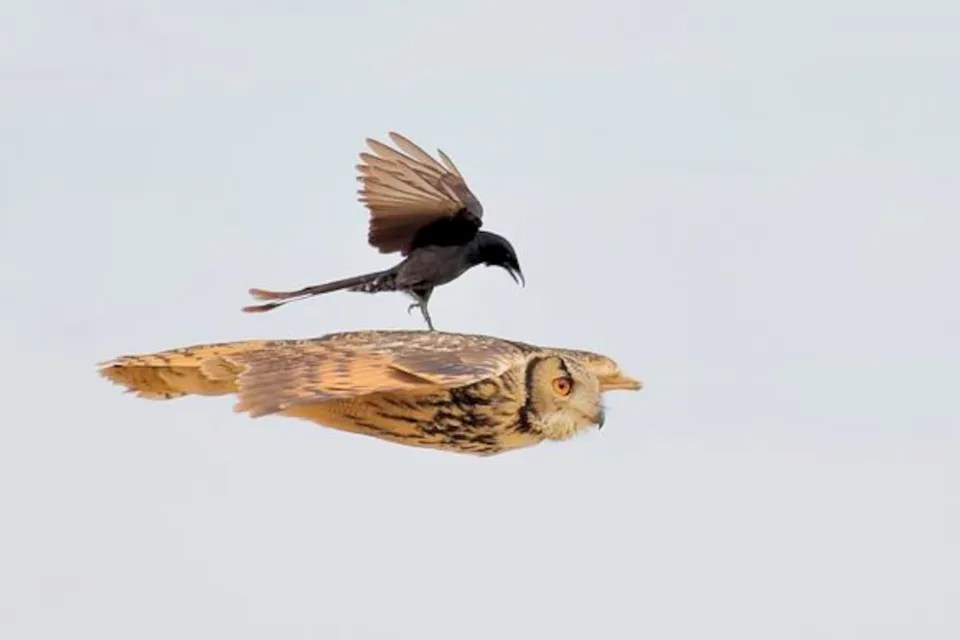
All this changed the day I saw the Drongo dive bombing and harassing a raven near the Drongo’s usual territory. Later in the day, I saw the very same Drongo busy chasing a kite away. The energetic Drongo was clearly not in an entertaining mood. The poor Kite didn’t seem like it had any evil intent and looked part puzzled and part surprised at the Drongo’s belligerence.
Soon, my understanding of the Black Drongo changed.
Drongos are extremely brave birds that do not hesitate to harangue and chase away any intruder they don’t like. The long forked tails that I imagined to be liabilities – like how long cloaks for superheroes are an ill-designed aesthetic addition – for this bird don’t seem to be anything other than cool scimitar-like tailcoats for this avian ninja. To top it off, Drongo’s have been said to be accidental visitors to Japan. How does one accidentally visit Japan I ask?
Drongos also seem to enjoy an effortless elder brother status among the earlier mentioned “category two” birds. The smaller passerines build nests in the vicinity of Drongo nests because of the attendant white-glove aircover they get from the Drongo’s presence.
Knowing all this now, I am at peace that the smaller chirpers have a ninja at hand that they all shelter under from the mean raptors. When I see the Drongo sleeping on the telephone lines nowadays, I’m not quite sure if he is not meditating about his martial life, cooking up moves to kick big-bird-butt.





 The Reluctant Book Worm