
For some days now, I have been reading Tim Birkhead’s excellent book Birds and Us, A 12,000 Year History, from Cave Art to Conservation. I picked it up in Kinokuniya in Bangkok (at the Central World outlet).
Sometime this year, I started taking a fledgling interest in the birds visiting my Bangalore home, chiefly the bulbuls.
Now, I’m no avian expert. I have read a few books on birds (which I plan to refer back to time and again whenever I spot a new species).
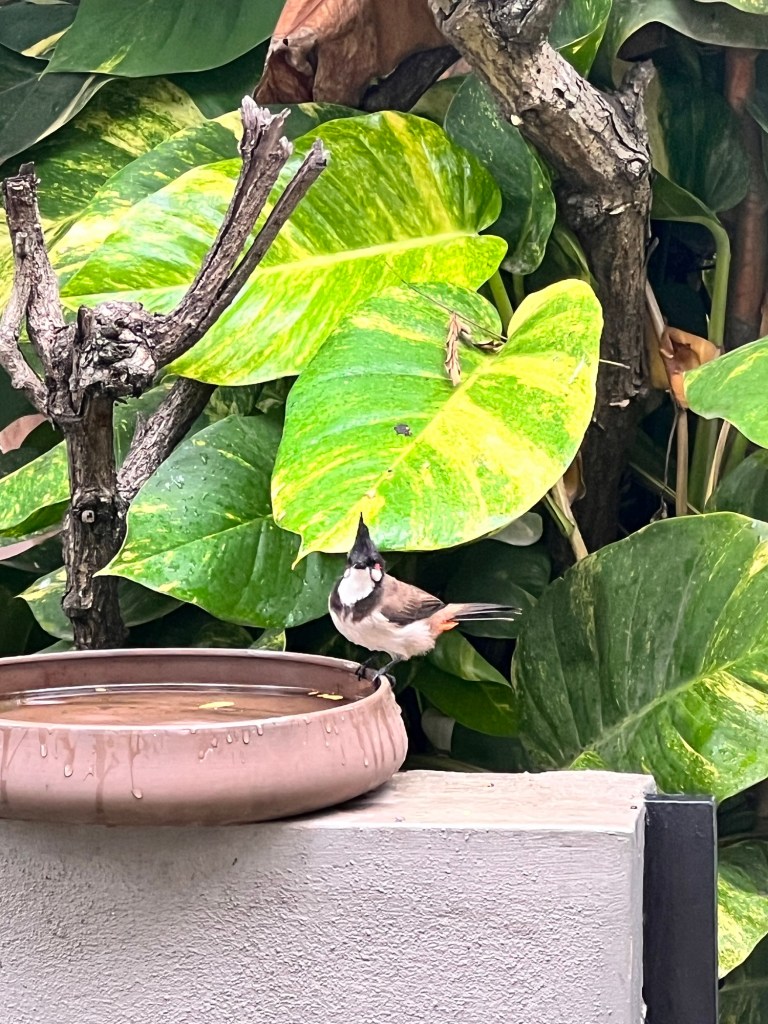
I had been noticing the birds for some days before I decided that enough was enough, and I had to identify these regulars who frequented the water bowl on my fence. I soon figured out that these were bulbuls. Cheeky little things. They come to cool themselves and frolic in the freshwater to beat the heat.
These red-vented bulbuls, the ones with the red bums and the red-whiskered bulbuls with their red cheeks, were fidgety, flighty characters. They hop one way and the other, dip in with a dash, and flutter in the water before jumping back onto the bowl’s rim and shaking themselves dry. They do this for about 10 minutes, pausing only to hop around the surrounding vines. Whenever I spot them, I put down my tea or the book I read and watch them curiously. When Mira is around, we take turns identifying them as red-vented or red-cheeked individuals. The birds take their time with the bath and then, with a dry flutter, take off on business elsewhere.
I am happy these daily bathers are not on the IUCN threatened list. Humanity is not kind to such delicate nature.
In Tamil, these bulbuls are called Kondai Kuruvis, a name I think is very apt because that is precisely how I recollected them a couple of times before looking them up. I recently discovered that in Malayalam, they have an even more evocative and gendered name. Irattathalachi.
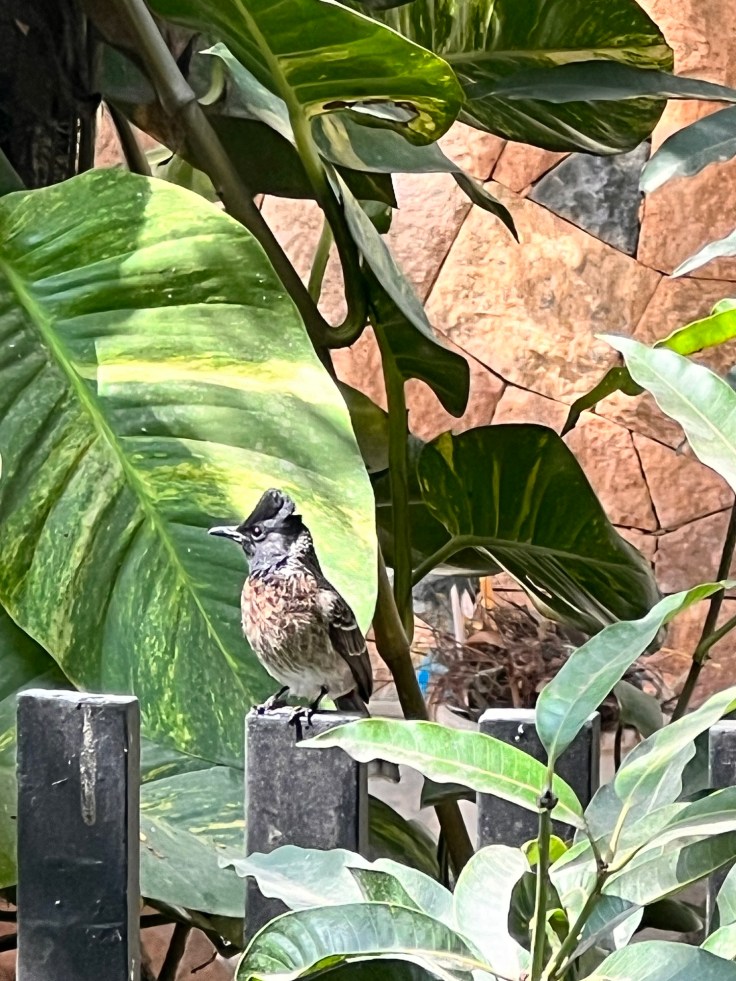
Over time, I started appreciating these passerines because I felt they were regular mates of mine. I got a pair of binoculars to track and study them more closely. Their majestic crests and crimson splatterings with a tasteful gradient of grays, browns, and blacks give them a distinguished look. However, through their antics, they fritter away that dignity. Their trills are distinct, cutting through the chitter of other birds, and they provide a welcome relief to tedious days every time they visit and jump in their public bathhouse.
These birds originate from South East Asia and India. However, today, these hardy buggers flourish wherever they have been introduced by those taken in by their charms. History always reminds us that birds considered economically useless and abound in millions are among those that have been driven to extinction. The passenger pigeon, for one, comes to mind. I have seen pictures where these pigeons once covered the entire horizon and blocked out even the sun in their masses.
Someday, I’ll know a lot about my bulbul friends and write more scientifically about them.
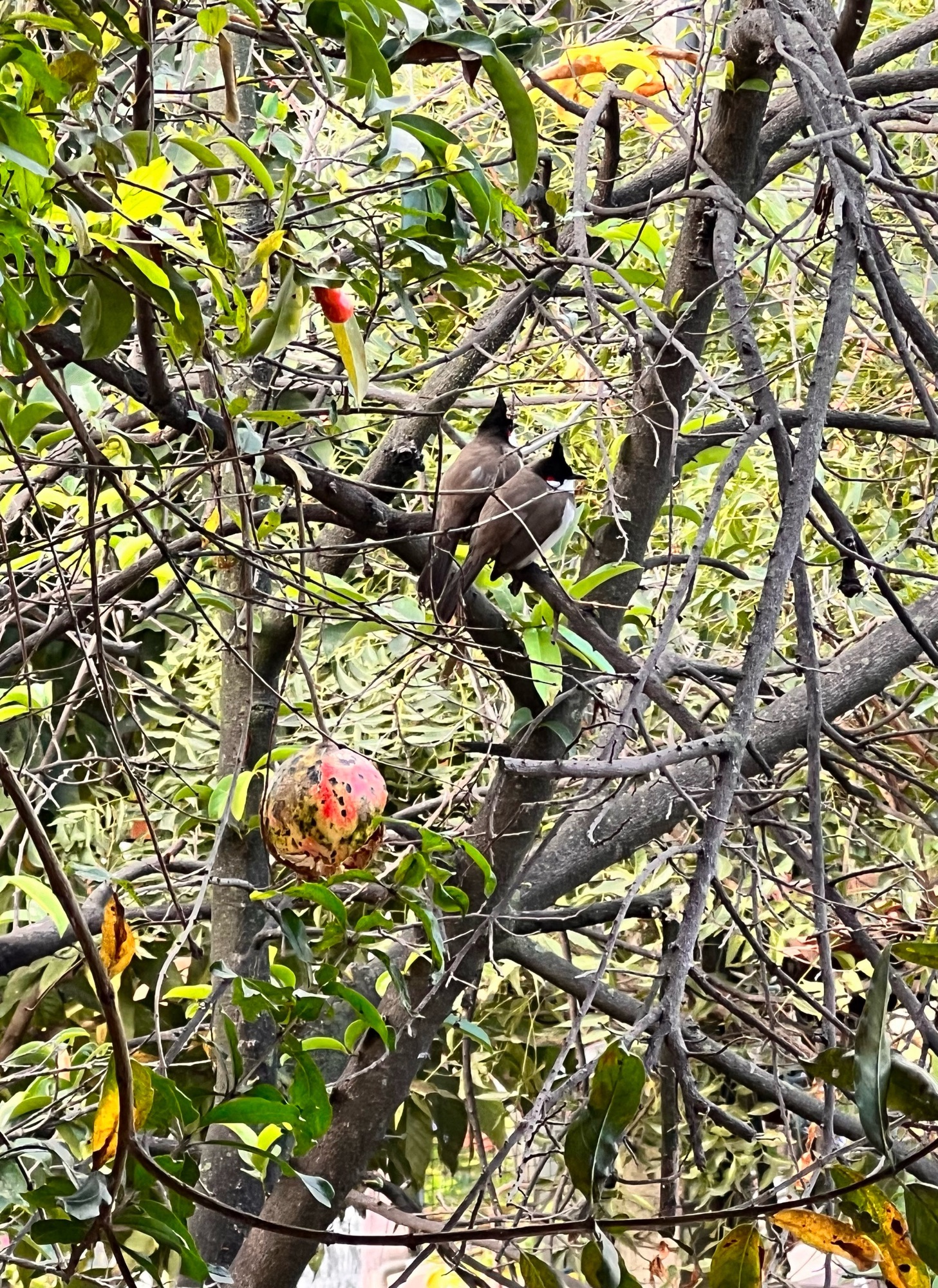
For now, I’ll just thank these cranberry-sprinkled flying bunnies for patronizing my water bowl and reminding me of nature’s rhythm as they raid my pomegranate tree.




 The Reluctant Book Worm
Leave a comment